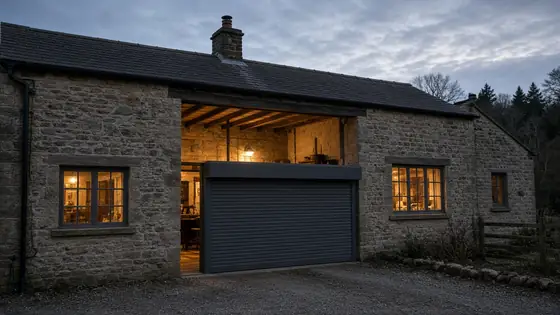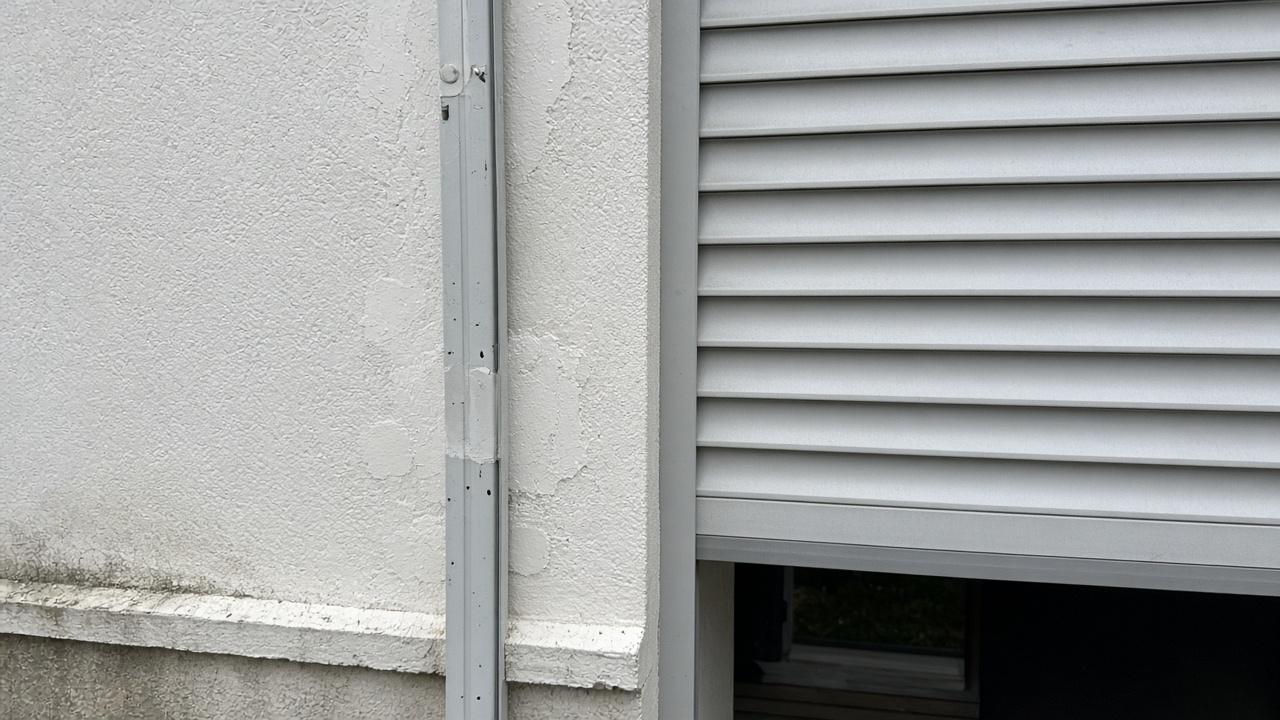
Side guides are screwed through whatever is on the wall: render, pebbledash, timber cladding or brick. Each fixing is a hole. On render, the hole is the start of a crack if nobody makes it good. That finishing is rarely inside a supply-and-fit shutter price unless you ask.
What the screws do to a rendered wall
Render is a coat, not a structure. A guide wants a fixing into the block or brick behind it, which means the screw passes through the render. Done carefully, with the right plug and a dab of sealant, the coat stays put. Done in a rush, the render stars around the plug, water gets behind it, and next winter a patch falls off below the guide.
Pebbledash is worse to patch because the stones never match. Smooth painted render can be filled and painted if you still have the paint. A through-coloured render that's chalked for fifteen years will show every repair as a clean dot. Look at the wall before you promise yourself an invisible job.
Who paints, and when
The shutter should be fitted and the limits set, and then the making good done around it. Painting the guides themselves is a different decision: powder-coated aluminium doesn't want household masonry paint, and a painted guide is a future peel. Paint the wall. Leave the guide in the colour you ordered.
If the whole elevation is about to be re-rendered, fit the shutter after the new coat, or accept that the guides will come off and the holes will be made twice. Put a shutter on a wall that's scheduled for render next month and you've bought the same fixing twice.
Write the finish into the quote
Ask the quote to say whether holes are sealed, whether render is patched, and whether paint is included. 'Making good' with no sentence under it means a bead of silicone. Silicone on render stains, and it isn't a repair. If you're going to live with a visible patch, agree that in daylight, not from a phone photo.
Brick is kinder. A plug in a mortar joint, colour-matched, is usually enough. Don't let a brick price be copied onto a rendered house without a line for the coat.
Cladding, tiles, and the holes you will see
Timber cladding and fibre-cement boards have their own problem: the guide must be fixed to the structure, not just to the board, or the board becomes the bracket and cracks at the screw. A secret-fix board is a poor place to find that out. Ask the installer what they're screwing into. If the answer is 'the cladding', stop and find the studs or the masonry.
Tile-hung bays are worse to patch than render. A broken tile is a matching problem, and a shutter guide on a tile slope needs a flashing detail, not a blob of mastic. If the opening is tile-hung, bring a carpenter or a roofer into the conversation before the shutter is ordered, and expect the making-good line to be larger than on a flat rendered wall. Ask them to price the tiles they might break, not a round number copied from a brick job.
Frequently asked questions
Will the guides crack the render?
They can, if the fixings blow the coat. A proper plug into the masonry behind, plus a seal, is the ordinary way to avoid that. Ask who's doing it.
Can I paint the shutter to match the wall?
Paint the wall, not the powder-coated curtain or the guides. Household paint on the slats is a peeling mess and a warranty problem.
Should the shutter go on before new render?
No. Render first, then fit, unless the installer is coming back to refix and you've agreed that second visit in the price.