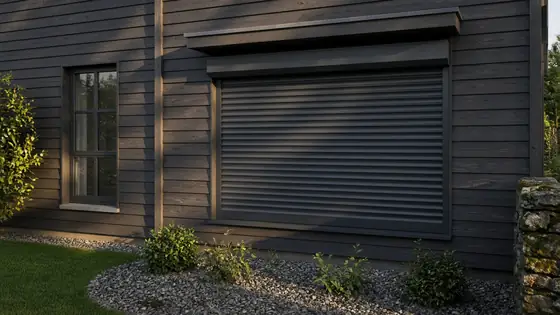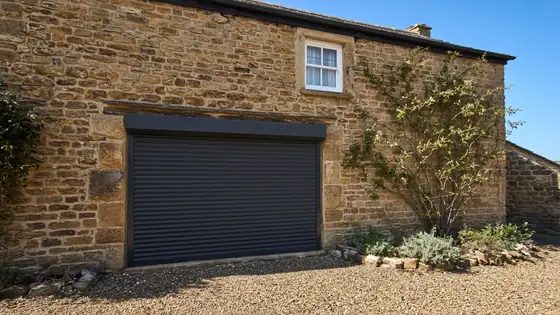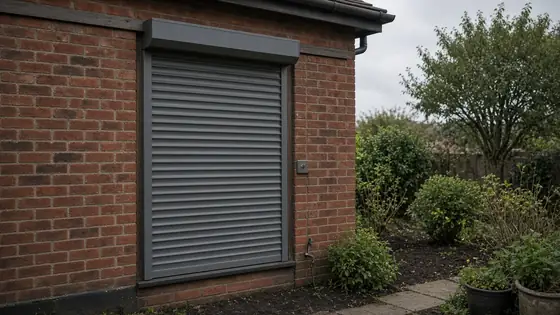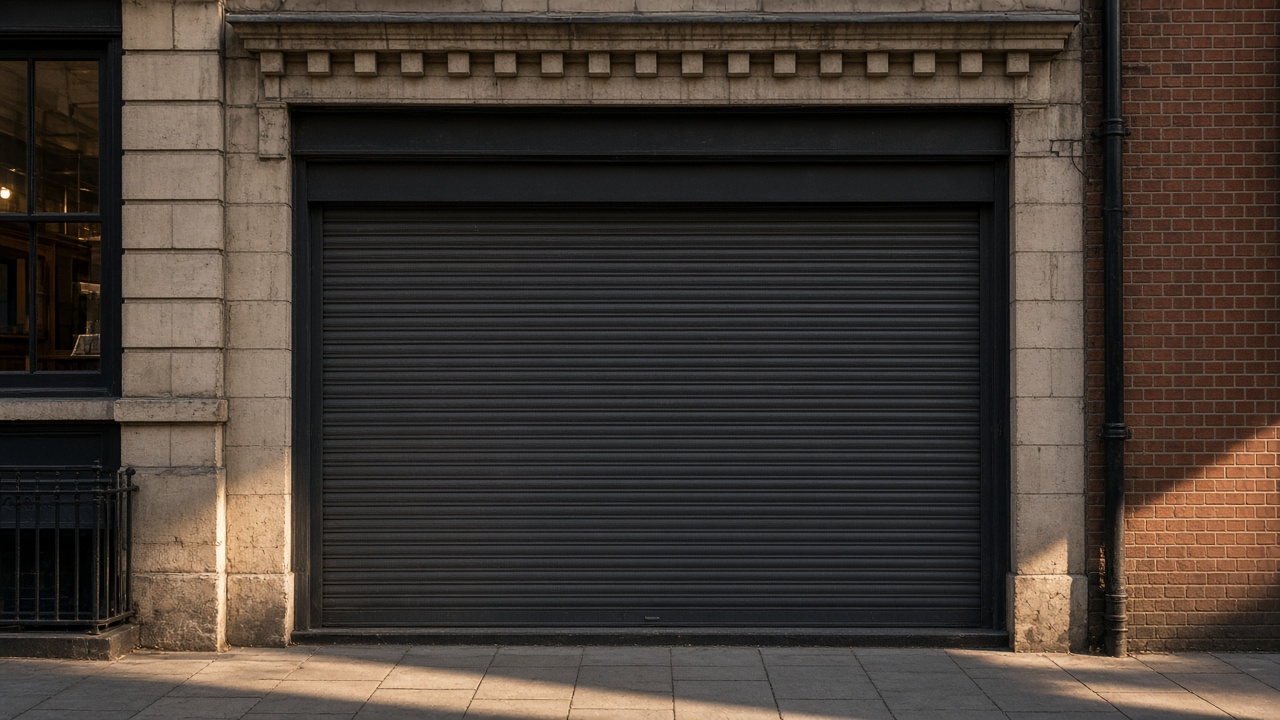
Yes, closed and locked roller shutters are a strong visual deterrent and make the glass behind them much harder to reach. But a shutter that is left up protects nothing. The households that get the security benefit are the ones whose shutters close every night and whenever the house is empty, which in practice means motorised shutters on a timer or an app.
Key points
- A shutter only adds security while it is down and locked.
- Timers, sunset modes and app control make closing automatic.
- Prioritise ground floor rear doors and windows hidden from the street.
- Avoid a pattern that tells passers by the house is empty for a fortnight.
Why shutters put burglars off
Most burglaries are opportunistic. Someone looks for an easy, quiet way in, usually at the back of the house where they cannot be seen. A closed metal shutter removes the easy option: breaking the glass no longer gets them in, and attacking the shutter takes time and makes noise. Police crime prevention advice consistently stresses making a target look harder than the one next door.
A standard foam filled domestic shutter is not a vault. It delays and deters. Tested security shutters delay longer. Either way, the protection exists only while the curtain is closed.
Make closing automatic
- Use a timer or a sunset setting so shutters close at dusk every day, including in winter when it gets dark early.
- Use a smart hub or app to close everything with one command when you leave.
- Set a holiday mode that opens and closes at slightly varied times so the house looks lived in.
- Check manual shutters are part of the bedtime routine, the same as locking the back door.
- Do not leave a shutter part open with the window open behind it when nobody is home.
Which openings matter most
| Opening | Why | Suggested spec |
|---|---|---|
| Rear bifold or patio door | Large glass, often hidden from view | Motorised, anti-lift locking, consider extruded |
| Ground floor rear windows | Common entry point | Foam filled with locks, or extruded |
| Side passage windows | Out of sight | Foam filled with locks |
| Front windows | Visible from the street, often lower risk | Optional, check planning |
| Upper floor windows | Lower risk unless reachable from a flat roof | Mainly for heat and blackout |
Locks and details that matter
Ask how the curtain resists being lifted from the bottom. Motorised shutters often use anti-lift springs or locking straps at the top of the curtain, so the motor holds the curtain down. Manual shutters may have a bottom bar lock. Guides should be fixed into solid masonry, not just the window frame, on vulnerable openings.
If an opening is also a fire escape route, it must still open from inside without a key or mains power. See security shutters and LPS 1175 for tested products and escape route rules.
What shutters will not do
- Protect an opening that is left up.
- Replace good door and window locks, which still matter when the shutters are open.
- Stop a determined, equipped attacker indefinitely.
- Guarantee an insurance discount. Ask your insurer before buying for that reason.
Frequently asked questions
Do roller shutters stop burglars?
They are a strong deterrent and slow an attempt down, but only while closed and locked. Most burglars look for an easier target.
Should I close my shutters when I go on holiday?
Use a holiday mode that opens and closes them at normal times, rather than leaving them shut for two weeks, which can signal the house is empty.
Are electric shutters more secure than manual?
Not inherently, but they are more likely to be closed, because a timer or app does it for you. Many motorised shutters also resist lifting.
Do shutters reduce home insurance?
Some insurers may take them into account, but discounts are not guaranteed. Ask before you buy.