Yes, a competent DIYer can fit a face fixed manual or solar roller shutter to a ground floor window using a supply only made-to-measure kit, and save roughly 25 to 40 percent of a fitted price. The hard parts are measuring accurately, fixing the box and guides plumb and square into masonry, and setting the motor limits. Wired motors need a safe electrical connection, usually by an electrician, and large doors or upper floors are best left to an installer.
Key points
- Supply only shutters are made to your measurements, so a measuring mistake is yours to pay for.
- Face fixed boxes on ground floor windows are the most DIY friendly.
- Solar shutters avoid mains wiring; wired motors need an electrician.
- Large bifold shutters are heavy and are a two or three person job.
Is DIY realistic for your job?
| Job | DIY? | Why |
|---|---|---|
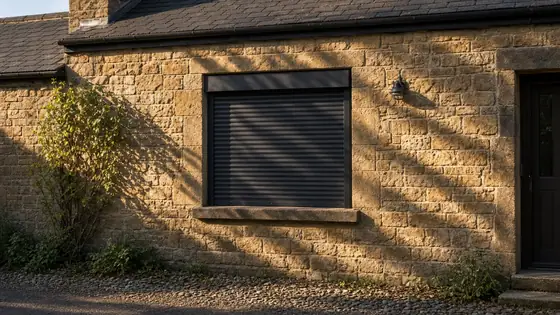
| Face fixed manual shutter, ground floor window | Yes, for a confident DIYer | Light, simple fixings |
| Face fixed solar shutter, ground floor | Yes | No mains wiring, limits usually preset or simple |
| Wired motor shutter | Mechanical fit yes, wiring by an electrician | Electrical safety rules |
| Patio door or bifold, over 2.5 m wide | Possible but hard | Heavy box and curtain, needs two or three people |
| Upper floor windows | Not advised | Working at height with a heavy box |
| Built in or top mounted boxes | No | Tied into window or lintel work |
| Security rated shutters | No | Certification usually depends on approved installation |
What you save
Supply only made-to-measure shutters typically cost around 60 to 75 percent of a fitted price, so a window that costs £800 fitted might be £500 to £600 supply only, plus fixings and delivery. On a whole rear elevation the saving can be worth having. Against that, a fitted price includes the installer's survey, responsibility for the size, the fitting guarantee and usually a longer product warranty.
Measuring
- Decide where the box and guides will sit: on the wall outside the reveal (face fix) or inside the reveal (recess fit).
- For face fix, measure the width you want covered, adding overlap either side of the opening so the guides land on solid brick.
- Measure the height from the top of the box position to the sill or threshold, at both sides and in the middle.
- Check for obstructions: window handles, sills that project, drainpipes, alarm boxes, vents and lights.
- Note which side you want the strap, crank or cable to come out.
- Check the supplier's measuring guide and confirm whether they want the overall size or the opening size.
Fitting, in outline
- Mark the guide positions with a level so both guides are plumb and parallel.
- Fix the guides into masonry with suitable anchors, not into the mortar joints where possible.
- Lift the box onto the guides (two people) and fix it to the wall.
- Feed the curtain into the guides if it is not pre-fitted, and attach the straps to the axle.
- For manual shutters, fit the strap or crank through the wall or frame and seal the hole.
- For motors, set the upper and lower limits following the motor instructions so the curtain stops correctly.
- Seal around the box and guides where needed and test several times.
Electrics
A wired shutter motor is a fixed electrical appliance. In England, adding a new circuit is notifiable building work under Part P, and any electrical work has to meet the wiring regulations. Most people have the motor connected by a registered electrician, often from a fused spur. Solar shutters avoid this entirely, which is why they are popular for DIY. See do you need an electrician for electric shutters.
Frequently asked questions
Can I install roller shutters myself?
Yes, a face fixed manual or solar shutter on a ground floor window is a realistic DIY job if you can measure accurately and drill masonry.
How much can I save fitting shutters myself?
Roughly 25 to 40 percent of a fitted price, but you lose the installer's responsibility for measuring and fitting.
Do I need planning permission for DIY shutters?
The same rules apply whoever fits them. Check before ordering if the house is listed, in a conservation area, a flat, or the shutter faces the street.
Can I wire an electric shutter motor myself?
Electrical work must meet the wiring regulations and new circuits are notifiable in England. Most people use a registered electrician.