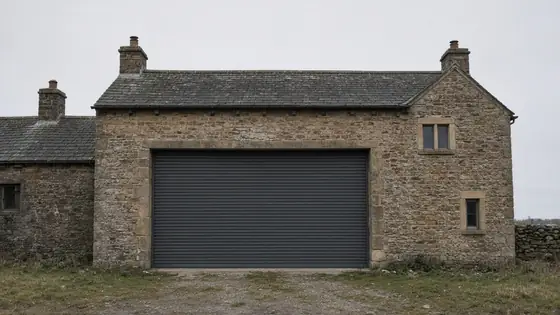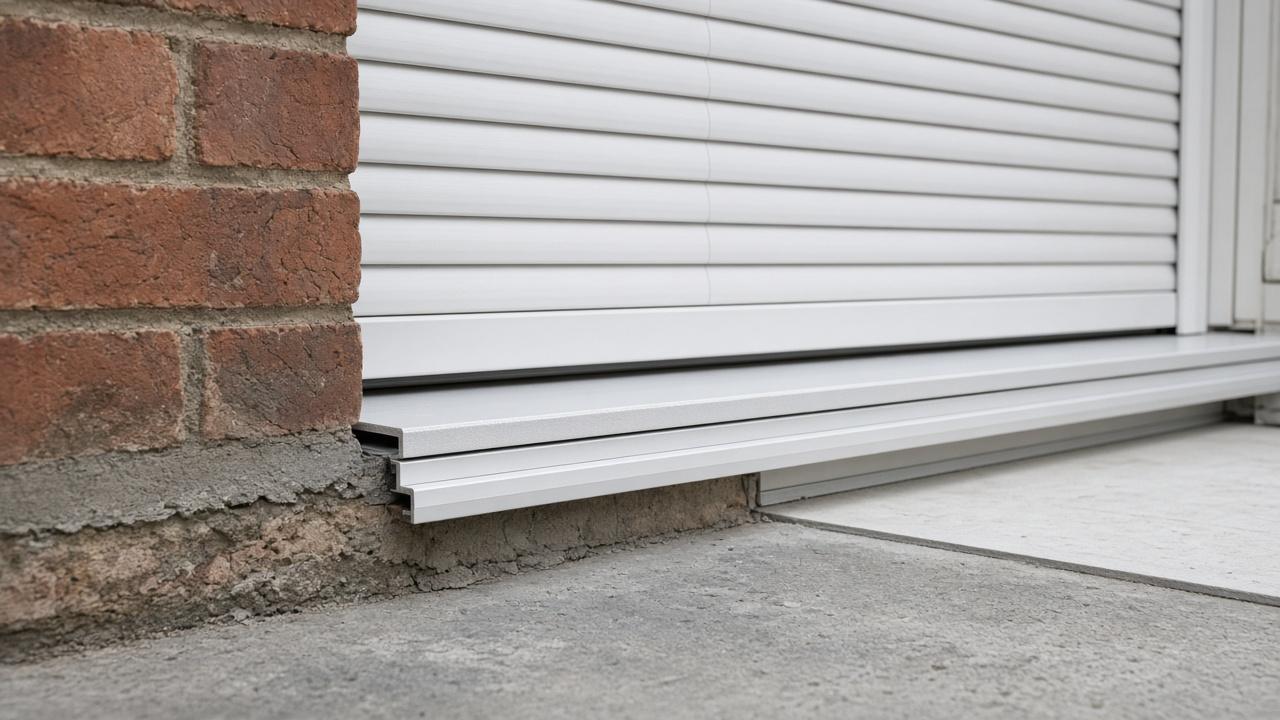
The motor learns how far to travel. If you replace the sill, the threshold or the bottom of the frame, that distance is now wrong. The curtain will stop in mid air, or it will drive into the new sill and trip. The fix is to teach the lower limit again, not to buy a new shutter.
What people see
After new doors, the shutter that used to meet the old threshold now hangs a finger's width up, or it grinds once and bounces back. Both are limit faults. The first is a limit set to a sill that was lower. The second is a limit set to a sill that was higher, so the motor is now pushing the bottom bar into metal.
A curtain that starts doing this overnight, with no new sill, is a different fault: a slipped limit, a worn brake, or ice in the guide. Don't run the 'new sill' procedure on a shutter that hasn't had any building work. You'll hide a mechanical problem inside a fresh setting.
Teaching it again
Each motor brand has its own sequence, usually a button on the motor head or a combination on the handset. The useful version is in the leaflet that came with the motor, not in a forum post about a different tube. If the leaflet's gone, the label in the box is what a fitter needs to bring the right instructions.
Set the stop so the bottom bar meets the sill and the seals touch, without the motor straining. Then run it twice from the top. A limit that looks right once can drift on the second cycle if the locks are catching. Watch the whole travel, not just the last inch.
When the sill change is too much
A new door that's 40 mm shorter than the old one is not a limit tweak. The curtain may be too long, and the slats will stack wrongly in the box, or the bottom bar will try to enter the guides at an angle. In that case the curtain needs shortening or replacing. The motor is still fine.
Tell the door company and the shutter company about each other before either visits. A door fitted on a Tuesday and a shutter 'repaired' on a Thursday, with nobody having measured the new height, is the expensive version of this page.
After the limit is set
Run the curtain at the speed you'll use at night, not in short jogs. A bottom bar that kisses the sill on a jog can still bounce when it arrives at full speed, and the motor will decide it's hit an obstacle. If that happens, the limit is a fraction high, or the new sill has a lip the old one didn't. Pack it or adjust it. Don't raise the force setting so the motor drives through the lip. That's how straps, locks and gearboxes die.
Write the date of the reset in the house file next to the motor model. The next person, often you in three years, needs to know the sill and the limit were changed together. A sticker inside the box lid is enough.
Frequently asked questions
Can I keep pressing the button until it learns?
No. Repeated starts overheat the motor. Use the limit procedure for that brand, once, and then test.
The shutter slams into the new sill. Is the motor dying?
It's more likely still trying to reach the old stopping point. Reset the lower limit before you replace anything.
Who should do it if the shutter is under warranty?
The installer who set it, if the doors were changed by someone else, may charge because the opening changed. The door fitter isn't automatically qualified to programme the motor. Ask the shutter firm first.