 Local Shutter Installers
Winter · Long note
Roller shutters in a British winter
Updated
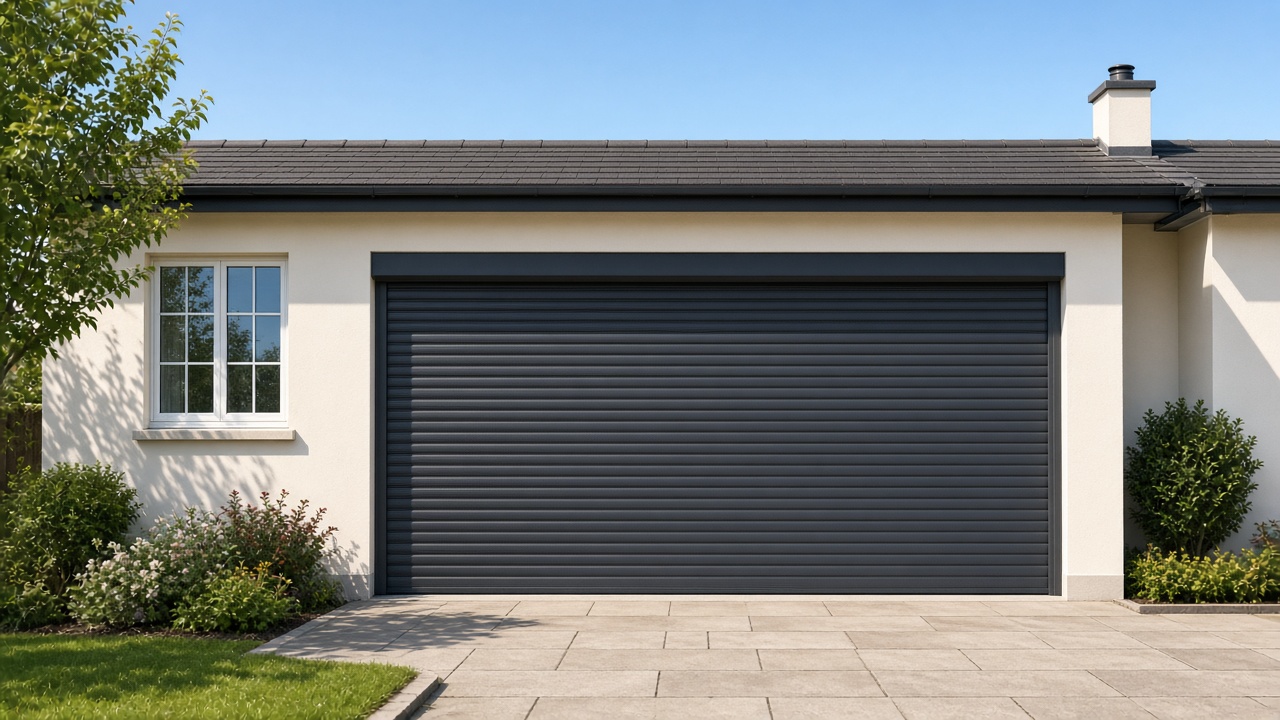
In winter a roller shutter is a night cover for glass. Closed at dusk, it adds an air gap and stops the room facing a cold pane. It is a comfort and a modest saving on that opening, not a new heating system, and it only works when it is down.
The pane after dark
Large bifolds and sliders that were lovely in the sales CGI are cold radiant surfaces in January. You feel them from the sofa. Curtains help if you have them and if they actually cover the glass. Many extensions have neither, because the doors were supposed to be the view. An external shutter is a cover you can put on that view without living with heavy drapes in a modern opening.
The physics people argue about is simple enough to use. The shutter is not insulation you glued to the wall. It is an extra barrier and a pocket of air, present only while the curtain is down. European shutter guidance treats the reduction in heat loss through the window as real in that condition. Treat claims of a whole-house transformation as sales.
A number you can sanity-check
Take a modern double-glazed door at about 1.4 W/m2K, six square metres, an indoor-outdoor difference of 12 degrees, and eight night hours. The glass alone is on the order of 0.8 kWh a night before you even discuss frames and draughts. A closed shutter that cut a quarter of that flow would save a few hundred watt-hours a night on that opening. Useful, visible on a big door, and not a reason to cancel the boiler service.
Old single glazing or a failed unit is a much worse number, and the right first spend is often the glass or a secondary pane, especially on a street the planner protects. A shutter over a rotten frame is a coat on a broken window. Do the window, then decide if you still want shade and security.
Do not throw away the winter sun
Low south sun in February is free heat. A shutter left down all day because the summer programme was never changed is an own goal. The sensible day is open while the sun is useful, closed when it is dark. East bedrooms can close again if the morning glare is the problem, which is a different timetable from the kitchen doors.
Motors with a clock need a human at the clock change. Five minutes twice a year. If nobody will do it, a simple switch by the door and a household that understands dusk will beat a clever scene that quietly went wrong in October.
Condensation and vents
Changing the temperature of the pane can move where moisture shows up. Houses that already stream in cold weather should say so at the survey. Trickle vents must not be sealed by accident if they are the background ventilation the window was relying on. A shutter that makes a room stuffy will be left up, and then the winter benefit is gone.
The box itself should not become a cold bridge. Front-mounted cassettes sit outside the heated volume, which is tidy thermally. A built-in box that interrupts the insulation can print a cold line indoors. Ask which side of the warm wall the metal lives on.
Wind, ice and actually using it
A curtain that rattles will be abandoned on the first windy week, which in Britain is most weeks. Brushes, fixings and a fair wind class are winter specification even though the purchase was sold in August. Ice in the guides means you wait, not that you drive the motor until something snaps.
If the solar panel never sees the winter sky, the motor may not be there for the dusk routine by January. That is the month the winter benefit was supposed to arrive. Wire it, or site the panel honestly.
How to tell if it is doing anything
On a cold night, close half the glass and leave half bare for an hour, then stand in the room. The covered side should feel less like a cold radiator. That is the demonstration. A spreadsheet that turns it into a payback of three years has usually forgotten that the shutter was also bought for July and for the door.
Count the winter job as comfort and as a slice of loss through one opening. Count summer as solar gain avoided. Count security separately. A product that has three jobs should not be forced to justify itself on the gas bill alone.
A night you can feel
Pick a cold evening and close the shutter on the largest pane for an hour. Stand where you usually sit. The covered glass should feel less like a cold radiator than the uncovered pane next to it, if there is one. That comparison is worth more than a percentage lifted from a German leaflet, because it is your glass, your gap and your draughts.
If you feel nothing, the curtain may not be meeting the sill, the window may be so leaky that the air gap is irrelevant, or you may be standing in a draught from somewhere else. Those are useful failures. They tell you to fix the seal or the window, not to buy a second storey of shutters on faith.
The sun you still want
South glass in February is a heater you do not pay for. A shutter on a summer timer will throw it away by closing at the wrong hour, or by being left down because nobody opened it after a dull week. The winter rule is ordinary: open for light, close at dusk. Write it on the handover page. The motor is there to make the dusk close likely, not to enforce darkness at lunch.
East rooms can close again if dawn glare hits a sleeper, then open once the house is up. That is a different programme from the kitchen doors. One house-wide scene is often wrong. Groups per elevation are the control that matches the way the sun actually moves.
Draughts, vents and failed units
A shutter will not cure a window whose seals have gone or whose trickle vent is a slit you can feel with a wet hand. Do those repairs first if the complaint is a bill and a cold stripe. Add the shutter if you also want summer shade and a cover at night. Stacking a cassette over a failed unit is how the winter story gets a bad reputation it did not earn.
Condensation that appears after you start closing the curtain every night is a clue about moisture and ventilation, not an instruction to wedge the shutter open. Mention it. Do not ignore a wet reveal until the plaster bubbles.
If the brief is one sentence
Write the brief for Roller shutters in a British winter before the brand. In this stand-in, the house is in Liverpool. Rear security and heat on family houses. Apartment enquiries often stop at the managing agent. If the sentence is heat, a solid curtain or a screen are both still in play. If the sentence is a harder door at night, a screen is the wrong tool. If the sentence is a bay on a polite street, an external roller may be the wrong tool entirely.
Terraces, Victorian bays and suburban semis, plus waterfront apartments that do not control their facade. That is the setting, not a promise that every street in Liverpool can take a box. Roller shutters in a British winter still has to survive the particular elevation, the particular reveal and the particular freeholder if there is one.
The example, kept small on purpose
One opening: 1.5 by 2.35 metres, drive taken as a belt, illustration £2,138. Roller shutters in a British winter is not that price. A wide bifold, a scaffold or a planning drawing moves it. A second window on the same day usually costs less than a second visit.
The worked opening for Roller shutters in a British winter is 1.5 m wide by 2.35 m high, 3.53 square metres of glass. This figure puts 645 watts per square metre on the pane and uses a g-value of 0.63, about 1434 watts into the room if the curtain is up. An opaque external shutter, taken as stopping 80 percent of that gain while it is fully down, leaves about 287 watts and keeps about 1147 watts out. That is a noon figure for comparison. An internal blind does not get the same reduction. For Roller shutters in a British winter, use the noon figure to compare two openings on the same house, then let a measured survey replace the figure.
Hold the winter figure beside it rather than in a separate sales conversation. Winter figure for Roller shutters in a British winter: glass at 1.2 W/m2K, 3.53 square metres, a 12 degree inside-outside gap and eight night hours. The bare pane is about 0.41 kWh a night on that crude sum. A closed shutter cutting about 18 percent of the flow leaves 0.33 kWh and saves about 0.07 kWh a night, only while it is down. Open it when you want winter sun.
Handover, or the product will not be used
Run the curtain twice while someone stands in the room and listens for a bang. Set the dusk close. Point at the solar panel, if there is one, and say what must not be painted. For Roller shutters in a British winter, write the motor brand and the curtain maker on the same page. One of those names will be the wrong one to phone in year six if you only kept the other.
Narrow terraced streets need the van considered before the manufacturing slot is booked. Access is part of the price. So is a no. Stop Roller shutters in a British winter if the door is an escape route and the motor has no way to open when it is dead. A photograph is not a manufacturing size.
What to do with this note
Roller shutters in a British winter is a long note because the decision is a pile of smaller ones: which pane, which side of the glass, which box the wall can carry, whether anyone may refuse the look, and whether you will actually lower the curtain. The 1.5 by 2.35 metre example, the belt, and the £2,138 illustration are there so those decisions have numbers attached. They are not an order form.
Take the openings that hurt into a survey. Leave the ones that do not. Ask the fitter to repeat the brief in a sentence you recognise. If they cannot, you are being sold a range rather than a remedy. Compare the next quote against the slat, the drive and the exclusions, not against a single bold total.
Keep the summer close and the dusk close as separate habits. Roller shutters in a British winter fails if the hardware is perfect and the curtain stays in the box. It also fails if you fit it on a front the council will make you remove. The successful version is smaller than a whole-house fantasy and more specific than an advert for German streets.
Questions worth asking the fitter
Do shutters replace double glazing?
No. They cover glass that is already there. Failed units and rotten frames should be repaired first.
Should they stay down all winter?
No. Open them when you want light and winter sun. Close them at dusk.
Will the heating bill collapse?
Expect a modest help on the openings you actually cover at night, not a new heating system.