 Local Shutter Installers
Heat · Long note
External shutters versus internal blinds
Updated
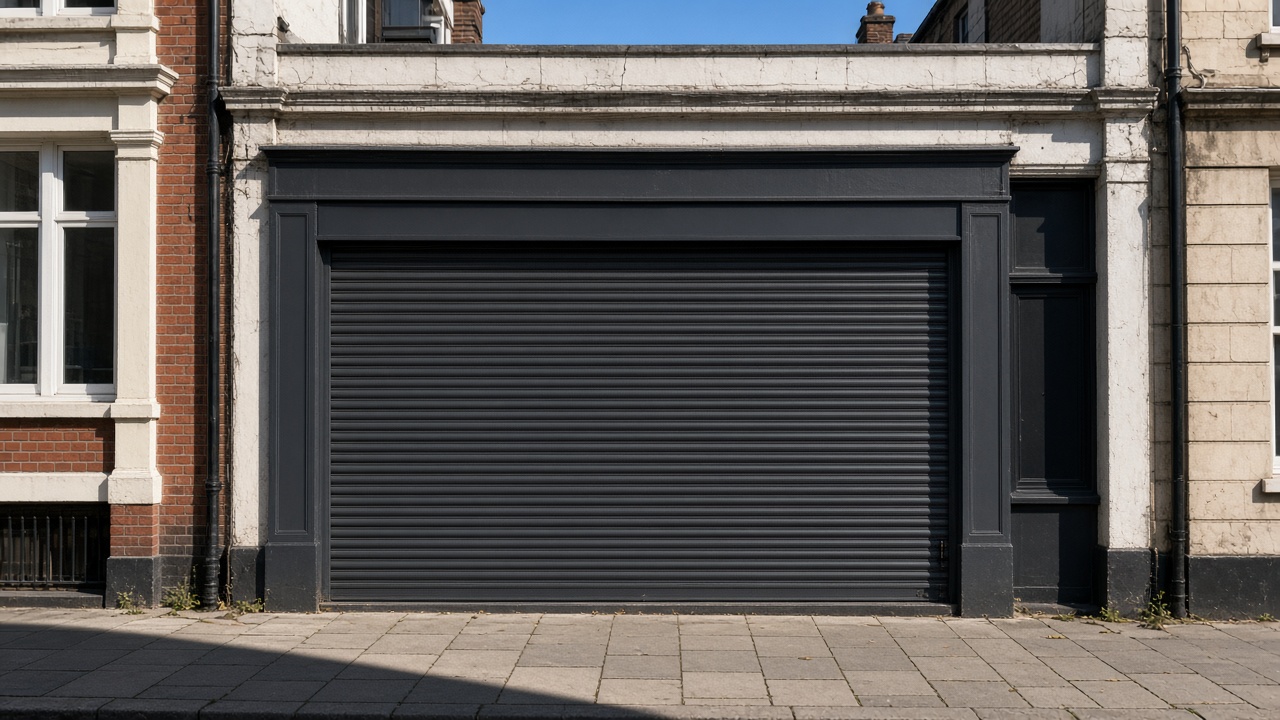
Internal blinds manage glare and privacy after the sun has entered. External shutters stop most of that energy before it passes the glass, and they can also cover the opening at night. If the room overheats, the outside is the side that matters.
Where the heat is born
Solar radiation through clear glass is absorbed by floors, blinds and furniture, which then warm the air. An internal blind is one of those surfaces. Reflective blinds send some energy back out, and the glass lets only a share of that escape, so the room still gains heat. An external curtain intercepts the radiation in the weather. The glass stays cooler. The room never receives the energy.
That is why a showroom demonstration with a lamp and a swatch is a poor guide, and why a July kitchen with a new blind can still be the worst room in the house. The blind may be doing its glare job perfectly.
What blinds are still for
Bedrooms that need privacy at night, bathrooms, and screens you want to tune during a film. Blinds are cheaper, they do not change the street, and they do not need a cassette on the brick. On a north window that never overheats they are often the whole answer.
On a south bifold they are a partial answer you may already own. Keep them. Add external shade if the temperature is the complaint. Stacking three internal products is how people spend the shutter budget without leaving the house.
Night, noise and the door
A blind does not add a locked skin and it does little for a cold pane compared with a sealed external gap. It will not slow an entry through the glass. If none of those matter, do not buy a shutter because a heat graphic looked scientific. If one of them matters as well as heat, the external product is doing several jobs and the comparison with a roller blind is no longer fair on price.
Noise claims should stay modest for both. A blind against a pane is a small acoustic change. A shutter plus the existing glass can be a larger one and still is not acoustic glazing.
Looks and permission
Blinds win the planning argument by not being outside. On a listed front that is decisive. The overheating opening is often the rear extension, where an external box is easier to justify. You can blind the front and shutter the back. The house is allowed to use two products.
A zip screen is the compromise object: outside, so the physics works, fabric, so the garden stays visible. It sits between a blind and a roller shutter. Put it in the comparison if the household will not tolerate a dark lunch.
Money, compared honestly
A blind on one window is the smaller invoice. A made-to-measure external shutter is a metal fabrication visit. Comparing a £200 blind with a £1,400 shutter as if they were the same line item is how the shutter looks like a rip-off and the blind looks like a solution. They are different tools. Compare the shutter with the cost of enduring the room, or with air conditioning, or with new glass, if those are the real alternatives.
Also compare two external quotes with each other, on the same openings, before you compare either of them with the blind you saw in a supermarket.
A short way to choose
If the sentence is 'the room is too hot because of the glass', start outside. If the sentence is 'I want the street not to see in', start inside. If both are true, you may end up with both, on different openings or even on the same opening for different hours.
Anyone who tells you the products are interchangeable is selling the one they have in the van.
A fair test on one pane
If you already have a blind, leave it down on a hot morning and feel the glass and the room. Then imagine, or temporarily shade from outside with a board if you can do that safely, the same pane covered in the weather. The outside shade leaves the glass cooler. The inside blind becomes a warm surface. You do not need a laboratory to notice which side of the glass the sun was stopped on.
People still prefer the blind because they can buy it this week and it does not change the brick. That is a legitimate preference. It is not evidence that the blind is doing the external job. Keep the preference and the physics in separate sentences.
Privacy is a different hour
At night a blind or a curtain is often the right privacy tool, especially on a street window where a cassette would be unwelcome. The shutter's night job on a rear door is warmth and a barrier, which you may not need on a bathroom. Mixing the two requirements into one product for every window is how bills inflate.
You can blind the front and shade the back. The house does not have to be a catalogue of one idea. Say that clearly if you are asking two different firms, so neither tries to swallow the whole schedule.
Price, without the trick
Put the blind's price next to the blind's job, and the shutter's price next to heat, night cover and delay. A four-figure shutter that also means you do not buy air conditioning for a single glazed wall can be the smaller project. A four-figure shutter on a north box room is a decoration.
If both quotes are external, then compare slat, box, motor and exclusions. The blind is no longer the benchmark. People keep it in the spreadsheet out of habit and confuse themselves.
A measured afternoon, using Birmingham as the stand-in
External shutters versus internal blinds needs a house, so this pass uses a rear wall in Birmingham. Hip-roof houses often added a rear extension with a wide slider or bifold. That is the opening people want covered, not the front reception. The opening in the example is 1.5 m by 1.5 m. Nobody should order from that example. It exists so the watts and the pounds have somewhere to sit.
The survey starts at the sill, not at the brochure. Handles, tracks and the headroom under the soffit decide whether a cassette even fits. Suburban drives are straightforward. Terraces need the carry route written down. If the reveal is out of square, the manufacturing width is the tight one, with clearance, not the average of three careless readings.
Watts, then pounds
The worked opening for External shutters versus internal blinds is 1.5 m wide by 1.5 m high, 2.25 square metres of glass. This figure puts 595 watts per square metre on the pane and uses a g-value of 0.76, about 1017 watts into the room if the curtain is up. An opaque external shutter, taken as stopping 90 percent of that gain while it is fully down, leaves about 102 watts and keeps about 915 watts out. That is a noon figure for comparison. An internal blind does not get the same reduction. For External shutters versus internal blinds, use the noon figure to compare two openings on the same house, then let a measured survey replace the figure.
Fitted illustration for External shutters versus internal blinds in Birmingham: £2,108 at September 2026 prices, for this 1.5 by 1.5 m opening with a solar motor. The figure allows a front-mounted aluminium curtain and ordinary fixing. It does not include scaffold, a rebuilt soffit, planning drawings, or a new window. A second opening on the same visit usually costs less than the first, because the van is already there. Compare two quotes only when the slat, the box and the drive match.
Dusk on the same pane
Winter figure for External shutters versus internal blinds: glass at 2.6 W/m2K, 2.25 square metres, a 12 degree inside-outside gap and eight night hours. The bare pane is about 0.56 kWh a night on that crude sum. A closed shutter cutting about 30 percent of the flow leaves 0.39 kWh and saves about 0.17 kWh a night, only while it is down. Open it when you want winter sun.
The West Midlands still has long dark evenings. Night closing is the winter habit that makes the shutter earn a second season. For External shutters versus internal blinds, that is a reason to show the household the curtain coming down at dusk during handover, not only the summer close. A timer left on a July clock will be wrong after the clocks change. Someone has to own that five-minute job.
What would cancel the order
Stop External shutters versus internal blinds if the door is an escape route and the motor has no way to open when it is dead. A photograph is not a manufacturing size.
Older window frames may not take a guide without new windows. Say so at survey, not after the curtain is built. Applied to External shutters versus internal blinds, the practical bias is to shade the rear glass that overheats and to leave a protected street front alone. A made-to-measure curtain is a bad thing to own if the next letter tells you to take it off.
What to do with this note
External shutters versus internal blinds is a long note because the decision is a pile of smaller ones: which pane, which side of the glass, which box the wall can carry, whether anyone may refuse the look, and whether you will actually lower the curtain. The 1.5 by 1.5 metre example, the solar motor, and the £2,108 illustration are there so those decisions have numbers attached. They are not an order form.
Take the openings that hurt into a survey. Leave the ones that do not. Ask the fitter to repeat the brief in a sentence you recognise. If they cannot, you are being sold a range rather than a remedy. Compare the next quote against the slat, the drive and the exclusions, not against a single bold total.
Keep the summer close and the dusk close as separate habits. External shutters versus internal blinds fails if the hardware is perfect and the curtain stays in the box. It also fails if you fit it on a front the council will make you remove. The successful version is smaller than a whole-house fantasy and more specific than an advert for German streets.
Questions worth asking the fitter
Are blackout blinds enough in a heatwave?
They darken the room. They do not stop the sun before the glass, so the heat gain remains much higher than with an external shutter.
Should I remove my blinds if I fit a shutter?
Not necessarily. Blinds still help for privacy when the shutter is up. They are not wasted. They are just not the cooling layer.
What about internal plantation shutters?
They are internal louvres, closer to a blind than to a Rollladen, with a joinery price. They do not replace external shade on a glass extension.