 Local Shutter Installers
Noise · Long note
Bedroom shutters for noise, blackout and heat
Updated
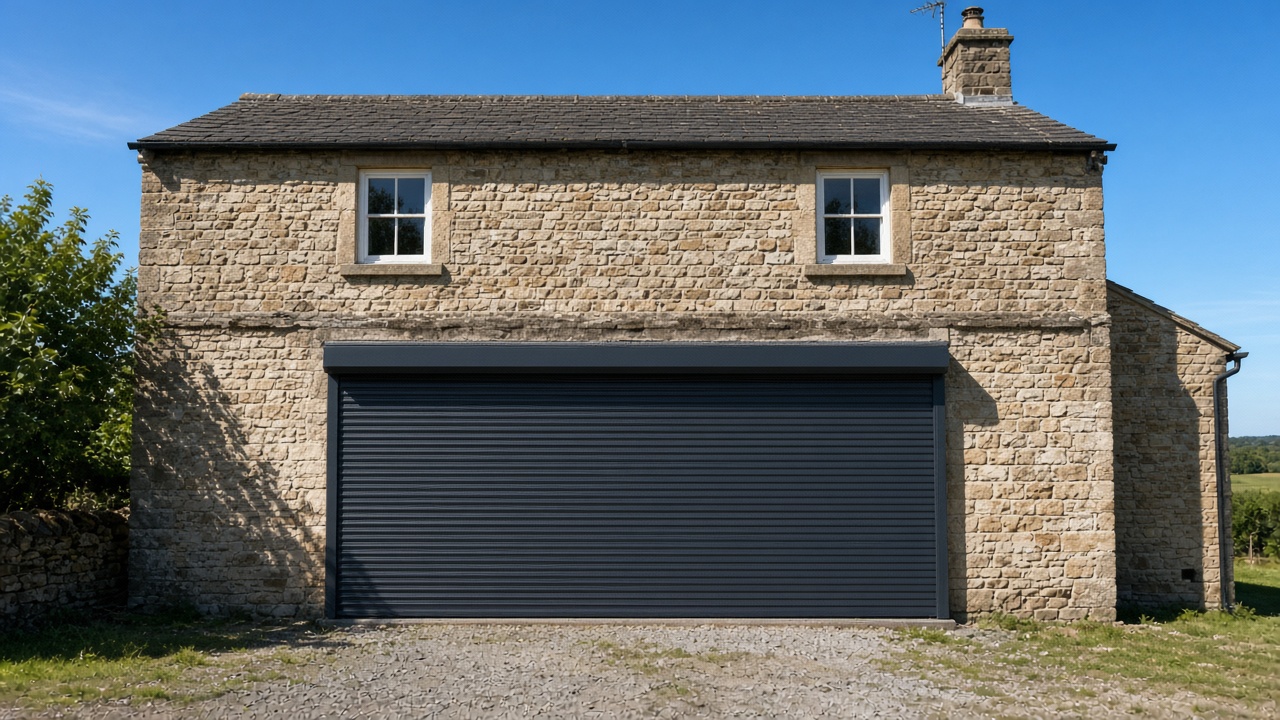
A bedroom shutter is usually bought for dark, quiet, or a child's room that faces the sun. A solid external curtain can help all three while it is down. It will not fix a party wall, and a perforated slat is the wrong pick if the point was blackness.
Dark, first
Shift workers and small children need the room dark when the street is bright. A solid slat will do that in a way louvres and many blinds will not. Light still leaks at the guides if the installation is sloppy, so the survey should talk about side gaps and the bottom bar, not only the colour of the curtain.
Perforated slats are for people who want to live in the room in shade. Do not let them be substituted into a night-shift bedroom because the showroom sample looked less severe.
Noise, modestly
A closed shutter adds a layer and a gap in front of the glass. Makers sometimes cite reductions on the order of 10 decibels. That can turn a harsh window into a tolerable one and will not make a bus route disappear. If the glass is a thin unit, acoustic glazing may be the larger spend and the shutter the extra.
Ask what the decibel figure was measured with. A number with no window beside it is an advert. Rattle from a loose curtain is a new noise you will notice at 1am, so brushes and fixings are part of a bedroom specification.
Morning sun
East bedrooms heat up early and then settle. A timer that has the curtain down before dawn and up when the house wants light is the kindest motor programme. West bedrooms need the opposite emphasis, late afternoon, which is when children are trying to sleep in summer.
The motor should be quiet and the end stop should not bang. Ask to hear a comparable curtain, or at least to have the limits set with the bedroom door shut and a person inside. A garage-door mentality is the wrong ear.
Children
Cords and belts at child height are a poor idea. A motor with a switch the child cannot casually jam, and a curtain that stops if it meets an obstacle, is the domestic specification. Do not put the only bedroom escape behind a motor nobody has explained.
A nursery on a south wall is one of the clearest cases for an external shutter in a whole house survey: heat and light on the same pane, at nap time.
Street fronts
The bedroom that needs the shutter is often the one on the street, which is the elevation a conservation area will look at. You may have to choose secondary glazing, internal blackout, or a carefully detailed external box with consent. Pretending the need for sleep overrides the designation is how enforcement letters start.
Rear bedrooms are simpler. If only one room is the problem, shutter that room. Symmetry with the spare room is optional.
What success feels like
The room is dark when you ask, the curtain does not chatter in a normal wind, and someone can open it without an argument with an app. In winter the pane feels less bleak at night. In the morning the timer has not closed the room into a cave an hour after you wanted daylight.
If you need silence, get the glass looked at as well. If you need darkness, specify a solid slat and a tight guide. If you need a cooler nap, the shutter has to be down before the sun has been on that wall for three hours.
Light leaks are an installation
A solid slat will black a room out only if the guides and the bottom bar actually close the gaps. People blame the product for a 10 mm slit of streetlight that was a setting or a crooked sill. Look at night, from the pillow, before you pay the final invoice. Perforated slats fail this test on purpose. They should never have been ordered for a night shift.
Dawn on an east window is a timer problem as much as a product problem. The curtain needs to be down before the sun, and up when the day is supposed to start, without a bang. If the motor thumps, adjust it while the fitter is there and the room is quiet enough to hear the fault.
Noise you can and cannot buy
Traffic through a tired double-glazed unit will drop if you add a sealed layer outside, and it will not become a rural lane. If sleep is impossible, price acoustic glass as the main work and the shutter as the blackout and the summer shade. Doing only the cheaper of the two and hoping is how bedrooms stay loud.
A rattling curtain is a new noise. Brushes, end locks and a wind class that suits a street exposed to funnelling gusts are the specification. A bedroom on a side return between two houses can be windier than the front, oddly. Stand there on a breezy day before you choose the lightest slat.
The street and the child
The window that needs darkness is often the one the conservation area can see. Have the internal blackout ready as the lawful alternative, and ask about the external box with a drawing rather than with a drill. A child's sleep is urgent and still not a defence against an enforcement notice.
Cords are a poor idea at child height. Obstacle stop on the motor matters. And the bedroom door, not the shutter, should be the escape you rely on. If the shutter is on a door from a basement room, read that sentence twice.
A measured afternoon, using Reading as the stand-in
Bedroom shutters for noise, blackout and heat needs a house, so this pass uses a rear wall in Reading. Suburban south and west rear walls take the afternoon sun on the patio doors. The opening in the example is 0.9 m by 2.35 m. Nobody should order from that example. It exists so the watts and the pounds have somewhere to sit.
The survey starts at the sill, not at the brochure. Handles, tracks and the headroom under the soffit decide whether a cassette even fits. Station-area streets are slower than the outer estates. If the reveal is out of square, the manufacturing width is the tight one, with clearance, not the average of three careless readings.
Watts, then pounds
The worked opening for Bedroom shutters for noise, blackout and heat is 0.9 m wide by 2.35 m high, 2.12 square metres of glass. This figure puts 595 watts per square metre on the pane and uses a g-value of 0.63, about 795 watts into the room if the curtain is up. An opaque external shutter, taken as stopping 80 percent of that gain while it is fully down, leaves about 159 watts and keeps about 636 watts out. That is a noon figure for comparison. An internal blind does not get the same reduction. For Bedroom shutters for noise, blackout and heat, use the noon figure to compare two openings on the same house, then let a measured survey replace the figure.
Fitted illustration for Bedroom shutters for noise, blackout and heat in Reading: £1,532 at September 2026 prices, for this 0.9 by 2.35 m opening with a belt. The figure allows a front-mounted aluminium curtain and ordinary fixing. It does not include scaffold, a rebuilt soffit, planning drawings, or a new window. A second opening on the same visit usually costs less than the first, because the van is already there. Compare two quotes only when the slat, the box and the drive match.
Dusk on the same pane
Winter figure for Bedroom shutters for noise, blackout and heat: glass at 1.2 W/m2K, 2.12 square metres, a 12 degree inside-outside gap and eight night hours. The bare pane is about 0.24 kWh a night on that crude sum. A closed shutter cutting about 18 percent of the flow leaves 0.20 kWh and saves about 0.04 kWh a night, only while it is down. Open it when you want winter sun.
Use the dusk habit in the explanation so the household does not judge the product only in July. For Bedroom shutters for noise, blackout and heat, that is a reason to show the household the curtain coming down at dusk during handover, not only the summer close. A timer left on a July clock will be wrong after the clocks change. Someone has to own that five-minute job.
What would cancel the order
Stop Bedroom shutters for noise, blackout and heat if the door is an escape route and the motor has no way to open when it is dead. A photograph is not a manufacturing size.
Leaseholders without a private rear wall should hear a no early. Applied to Bedroom shutters for noise, blackout and heat, the practical bias is to shade the rear glass that overheats and to leave a protected street front alone. A made-to-measure curtain is a bad thing to own if the next letter tells you to take it off.
What to do with this note
Bedroom shutters for noise, blackout and heat is a long note because the decision is a pile of smaller ones: which pane, which side of the glass, which box the wall can carry, whether anyone may refuse the look, and whether you will actually lower the curtain. The 0.9 by 2.35 metre example, the belt, and the £1,532 illustration are there so those decisions have numbers attached. They are not an order form.
Take the openings that hurt into a survey. Leave the ones that do not. Ask the fitter to repeat the brief in a sentence you recognise. If they cannot, you are being sold a range rather than a remedy. Compare the next quote against the slat, the drive and the exclusions, not against a single bold total.
Keep the summer close and the dusk close as separate habits. Bedroom shutters for noise, blackout and heat fails if the hardware is perfect and the curtain stays in the box. It also fails if you fit it on a front the council will make you remove. The successful version is smaller than a whole-house fantasy and more specific than an advert for German streets.
Questions worth asking the fitter
How much quieter will it be?
Often enough to notice, sometimes described around 10 decibels, and not a substitute for acoustic glass on a main road. Ask for the test basis.
Will it make the room fully black?
A solid curtain fitted with tight guides can get very close. Perforated slats will not. Pinholes of light at the sides are an installation fault if blackness was the brief.
Is the motor too loud for a baby?
A decent tube motor is acceptable if the limits are set so it does not bang. Listen to one. Do not put a commercial door motor on a nursery window.