Systems guides
Boxes, slats, guides, lintels and brands.
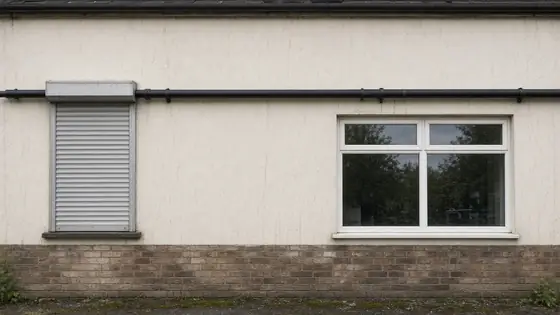 SystemsA soil pipe where the shutter box needs to goAn external waste pipe across the head of the doors is a plumbing job before it is a shutter job.
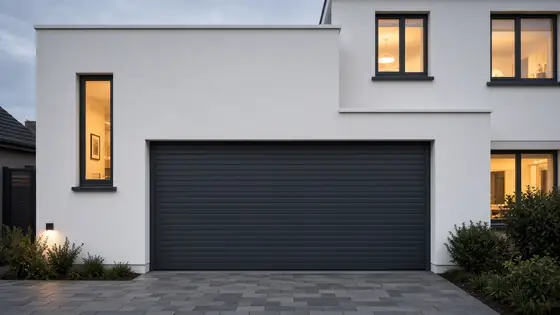 SystemsBuilt in roller shutters and shutter lintels: integrated boxes explainedHow built in (integrated) roller shutters and shutter lintels work on UK new builds, extensions and renovations, compared with face fixed and top mounted boxes, plus thermal and cost considerations.
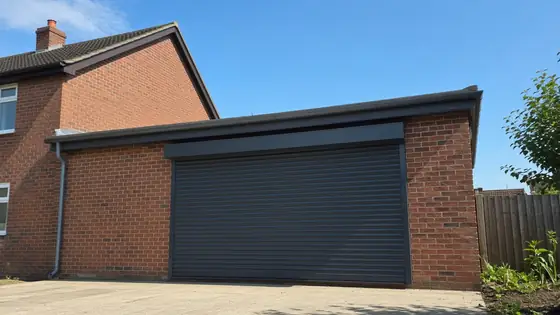 SystemsExternal sliding shutters: when panels on a track suit a UK houseHow external sliding shutters work, where they suit UK homes (wide openings, balconies, modern elevations, no room for a roller box), louvred, perforated and solid panels, manual or motorised, wind classes, security claims to check, planning, and how they compare with rollers and hinged shutters.
 SystemsRoller shutter brands in the UK: who makes whatA guide to the external roller shutter, motor and external blind brands UK installers use: Alulux, heroal, ROMA, Bubendorff, Schüco, SWS SeceuroShield, Warema, Caribbean Blinds, Velux, Somfy and more.
Quick answers
- Belt operationA belt winder is simple and cheap, but it needs a slot through the wall or frame for the strap. A badly cut slot means draughts and a water risk.
- Box sizes from about 137 mm upwardBoxes grow with the curtain height and the slat. Common cassettes step through sizes around 137, 150, 165, 180 and 205 mm, and security or tall-door.
- Cables through cavitiesWith a wired motor, it's tempting to drill straight through a cavity wall. That can wet the cavity, pierce a tray or create a thermal puncture for the.
- Fixing into brickBrick and block are the friendly materials. Render over insulation, crumbling mortar and soft red rubbers are not.
- Front-mounted shutter boxesA front-mounted box, the Vorbaurollladen, sits on the outside face above the window. It's the usual UK retrofit because the wall doesn't have to be.
- Obstacle detectionDecent tube motors stop or reverse if the curtain hits something. That matters over a bifold that isn't fully stacked, over a child, and over a plant.
- Radio motors and wall switchesA handset you lose is a bad control system. A wall switch, a phone app and a simple timer are all different, and a good job offers the one you'll still.
- Reveal depthSide guides need a flat face and enough depth. A shallow uPVC frame, a shaped brick reveal or a bifold track can steal that face.
- Top-mounted boxes on new windowsAn Aufsatz system sits on the window frame and is fitted at the same time as the window. Depending on the detail, the box can finish inside, outside or.
- Wind classShutters sold in Europe are commonly judged against EN 13659, which includes wind resistance.
- Wired motors and solar motorsWired motors are the right answer when the panel would sit in shade, when you're replastering anyway, or when several large curtains would rather share.