A wall roller shutter doesn't shade a roof. Velux roof windows can take a Velux shutter matched to the size code. Roof lanterns need a product made for that lantern, or a change to the glass, or you live with the heat gain.
Two kinds of roof glass
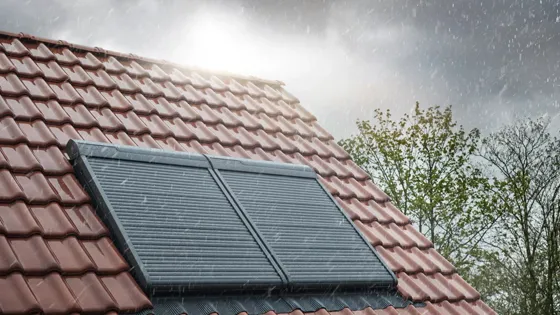
A roof window is a single manufactured unit in the slope, with a size code and a maker. Velux dominates that market in Britain, and it sells blinds and shutters, including solar versions, for its own windows. The shutter is an accessory to that window, not a general roof blanket.
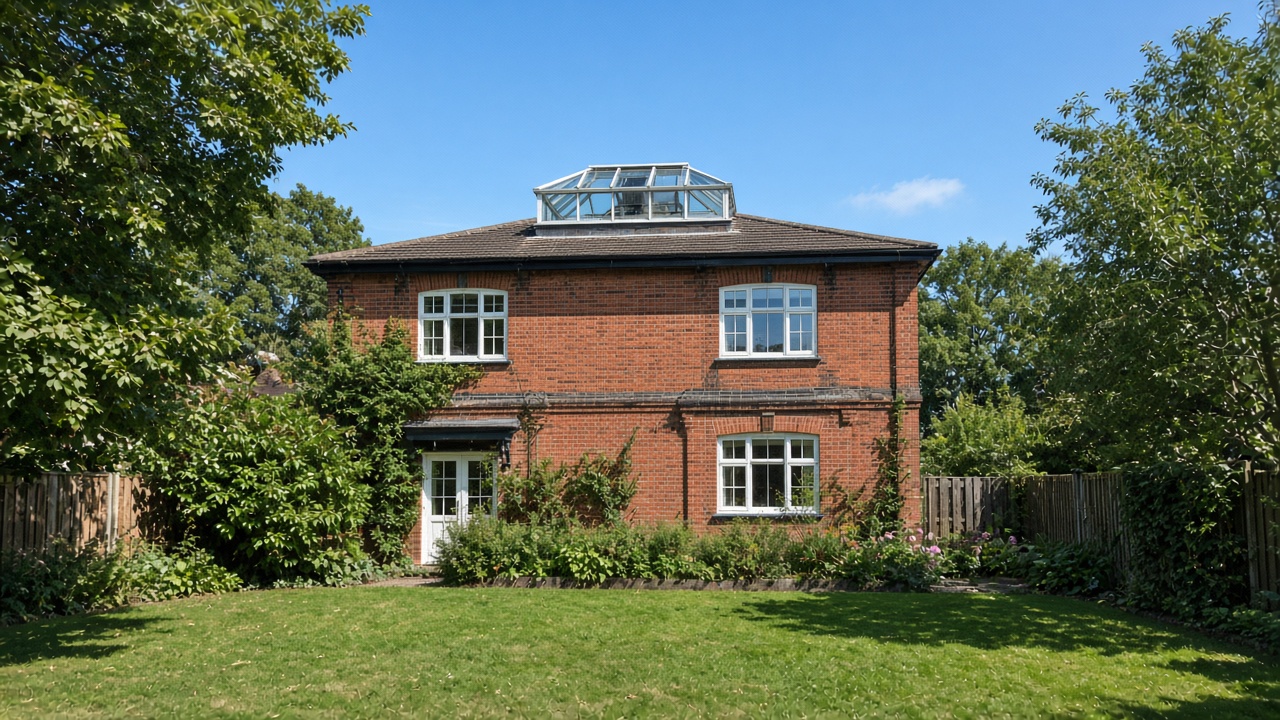
A lantern is a raised glass roof on a kerb, often made from separate panes and bars. It doesn't have a Velux size code, and a roller shutter from the bifold range can't be bent over it. Treat any quote that uses one price for 'the glass roof' as unfinished. A full conservatory roof is a different job again; our guide to conservatory shutters covers roof shutters, roof blinds and what makers publish about them.
Why the lantern hurts more
High summer sun hits roof glass more directly than it hits a vertical door. The heat arrives right over the table, which is why people describe a lantern as unbearable even when the doors are shaded. Internal lantern blinds exist, and they suffer the same fate as internal door blinds: they're behind the glass.
External lantern shading is a specialist product, sometimes a tensioned screen, and it has wind and waterproofing details that a window shutter fitter may not know. If you can't find a credible external option, the alternatives are better glass at the next replacement, or a solid roof with a rooflight that can take a proper blind or shutter.
Velux, specifically
Match the shutter or blind to the window code. Solar versions suit roofs where you don't want a cable dragged through the lining. Mains versions suit a refit where the cable is easy. An old or non-Velux window may not accept the accessory. Don't order from a photo of the reveal.
Access is the labour. A low roof over a flat extension might be reached carefully. A steep tile slope is a scaffold conversation. The accessory can cost less than the access, so put both on the quote.
Loft bedrooms
Lofts overheat because the slope sees sun all day and the room is small. A roof window shutter plus ordinary ventilation is the right toolkit. A vertical shutter on a dormer cheek only helps the cheek. If the hot pane is the one in the slope, buy for the slope.
Dawn light in an east-facing roof window is a timer job. Blackout is a product option, not the default of every blind in the range. Say so if shift work is the reason.
What not to buy
A set of facade shutters for the kitchen doors, sold as the cure for a lantern you can still see the sky through. Window film on a lantern as a casual first try, without the glass maker's view on thermal stress. A plantation shutter in a loft reveal that doesn't actually cover the pane in the slope.
Also don't assume Part O of the building regulations will specify a product for your 2009 extension. That document shapes new homes. Your lantern is a practical problem, not a regulation you can quote at a fitter to make them responsible for the temperature.
A clean brief
List every pane that sees the sky: doors, sidelights, lantern, roof windows. Next to each, write hot, bright or fine. Buy shade only for the ones that are hot or bright, using a product that can actually reach that pane.
If the lantern is the only misery and nobody will make an external shade you trust, say so, and spend the money on glass or a different roof, rather than on a wall shutter that gets blamed for a job it couldn't see.
Name the pane before the product
Write a list: bifold, side light, lantern, roof window over the stair, dormer cheek. Put a tick next to the ones that are hot or blinding. Only then pick a product, and only a product that can actually reach that pane. A wall shutter ticked against a lantern is a category error you can catch in pencil.
Roof windows have maker codes. Lanterns have widths, bar layouts and a kerb. Those are different kinds of information. A fitter who measures a Velux as 'about a metre of glass' isn't ready to order the shutter that has to match the flashing.
Access is often the money
The accessory for a single roof window can cost less than the scaffold that reaches it. Say so on the quote. Fitting from inside is sometimes possible, and sometimes a line used to avoid the scaffold price. Ask which, and what happens to the lining if someone's wrong.
Lanterns over a single-storey extension are easier to reach and harder to shade well. External fabric systems and replacement glass are the grown-up options. A roller borrowed from the door range won't bend over the hip of the lantern, whatever the drawing on the tablet suggested.
Heat you feel on your head
Sit in your usual chair at the usual hot time. If the discomfort is overhead, buying door shutters is a distraction with a long lead time, and you'll end up cross with an innocent cassette. Fix or accept the lantern first, then see whether the doors still need help.
Loft bedrooms are the other version of the same mistake: the slope is the collector, and the little vertical shutter on the dormer cheek is a side issue. Spend the money on the slope. Leave the cheek until someone is actually bothered by it.
Frequently asked questions
Can I put a normal roller shutter on a lantern?
No. Lanterns aren't a rectangular wall opening. They need their own shading design.
Are all roof blinds external?
No. Many roof window blinds sit inside the pane and mainly control light. If heat is the reason, ask whether the product is outside the glass.
Does a Velux shutter fit other brands?
Assume no. Match the maker and the size code.