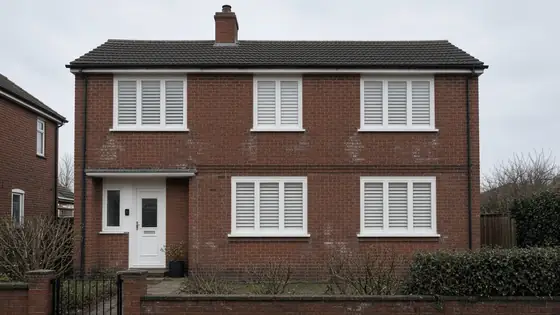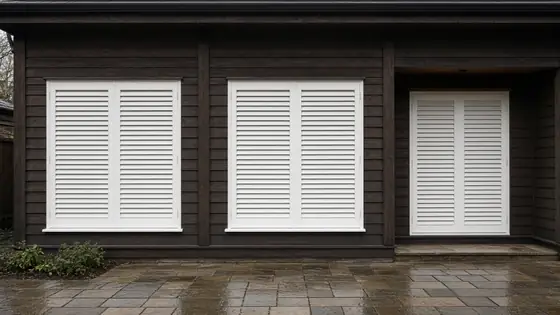
Most conservatories can take plantation shutters on the side windows and doors, and some makers also make roof shutters. The side windows take ordinary or shaped shutters on a frame, French doors take hinged panels, and bifold or sliding doors take tracked shutters that fold or slide along a top track. The roof is the hard part: Shuttercraft and Closs and Hamblin say they make roof shutters, but neither publishes size or pitch limits, so get the limits in writing at survey. Choose vinyl, PVC or painted hardwood rather than MDF, because a conservatory is the hottest and often the dampest room in the house.
Key points
- Treat the conservatory as three jobs: side windows, doors and roof. Each needs a different shutter, and you do not have to do all three.
- Interior shutters cut glare and give privacy. Only shading outside the glass stops most of the heat.
- No maker we checked publishes size or roof pitch limits for conservatory roof shutters, so get them in writing on the quote.
Which shutter for which part of the conservatory
Plan a conservatory one part at a time. The side windows are usually the easy part, the doors are where tracked shutters come in, and the roof is a specialist job with fewer makers and less published information. The table sets out the choices.
| Part | Inside the glass | Outside the glass | Ask about |
|---|---|---|---|
| Side windows above a dwarf wall | Full height, tier on tier or café style shutters on a frame | A conservatory roller system, from a specialist maker | Clearance for window handles and opening sashes |
| Angled or gable end glass | Shaped shutters made to the outline | Rarely offered | Which sections tilt and which are fixed |
| French doors | Hinged full height panels on the door frame | A roller per door | Panels must fold clear of the door handles |
| Bifold or sliding doors | Tracked shutters on a bifold or bypass track | An electric roller across the opening | Panel width limits and where the stack sits |
| Glass roof | Roof shutters from some makers, or roof blinds | A conservatory roof roller system | Size and pitch limits in writing, catches, motor |
| Solid replacement roof with roof windows | A shutter or blind made for that roof window | An external shutter for that window model | The roof window's size code |
Side windows: frames, shapes and tracks
The side windows are standard window units, so they take the same plantation shutters as any other window, fixed on a frame inside the opening. Café style covers only the lower half, which suits a conservatory that faces a neighbour; tier on tier lets you close the bottom and keep the top open for light.
Where the glass is angled, as on a Victorian style conservatory or a gable end, shaped shutters are made to the outline. Shuttercraft's style guide lists shaped shutters for curved or angled windows and gable ends, and says they can fit nearly all tricky shapes. Ask which sections open and which are fixed, because odd shapes often have a fixed panel.
Long runs of side glass, and any door, can take tracked shutters, where panels hang from a top track and fold or slide. Chichester Shutters gives a 660 mm panel width limit, so a four panel set covers up to 2,640 mm. It says tracked shutters need a bottom guide, and most need a horizontal rail once the panels are taller than 1,981 mm. Our guide to shutters for bifold doors compares tracked shutters with external rollers on the doors.
The roof: roof shutters, roof blinds and what makers publish
Few makers sell shutters for a conservatory roof, and those that do publish very little detail. Here is what each maker we checked says.
Shuttercraft says its conservatory roof shutters are made to your exact specifications and fitted directly to the conservatory, under a 10 year warranty, but gives no size, pitch or weight limits. Its skylight page says shutters that are too high to reach can be motorised with its PowerMotion remote control, which matters on a roof you cannot reach. Closs and Hamblin, a Sussex retailer, says its shutters can be designed for the roof as well as the walls and doors. It says optional roof catches stop a shutter falling open on a sloped or horizontal roof, that each slat is supported at both sides so it will not sag, and that its made to measure service covers the South East only.
Thomas Sanderson sells conservatory roof blinds rather than shutters: Duette and pleated blinds, with electric versions controlled by app, timer or remote. It gives no size or pitch limits either. A roof blind is lighter than a shutter and folds away, but it is still inside the glass.
Because nobody publishes limits, the survey is where you find them. Ask the fitter to write down the largest panel, the lowest and highest roof pitch they will fit, how the panels are held shut, and whether the louvres are moved by hand, by a pole or by a motor.
Heat and glare: what interior shutters can and cannot do
Interior shutters are good at glare and privacy. Tilting the louvres directs light up and away from a screen or a dining table, and closing them hides the room at night. They are much weaker on heat, because the sun has already passed through the glass before it reaches the louvres, so much of the heat stays in the room. Our guide to south facing glass extensions that overheat explains why.
Shading outside the glass stops the heat before it gets in. ES-SO, the European shading organisation, says roller shutters reduce solar radiation by up to 96% when fully extended. On a conservatory, that means an external system over the roof, where most of the summer sun lands, and over the south or west facing walls. If the roof is the problem and outside shading is not possible, our guide to shading roof lanterns and Velux windows covers the other routes.
Material: heat, sun and damp
A conservatory swings from hot and bright in summer to cold glass in winter, and if your glass runs wet on winter mornings, the bottom rails of a shutter sit in that damp. Pick the material for the worst day, not the average one.
Makers' own guidance points away from MDF. Shuttercraft says MDF can take damage from water, and that hardwood is less affected by climate and better suited to rooms where damp can be present. Its skylight page adds that real hardwood is not always the best option where shutters are exposed to moisture or steam, and offers its Java range in waterproof ABS. Thomas Sanderson sells its conservatory shutters in vinyl, which it says will not warp or fade in the bright sunlight of a conservatory; its Waterberry range is polyresin, sold as 100% waterproof, with a 5 year guarantee.
So vinyl, PVC or ABS is the safe choice for a damp or very sunny conservatory, and painted hardwood suits a dry, shaded one. On roof and door shutters, ask the maker for the panel weight and the largest panel it will make in your chosen material, because a heavy panel loads its hinges and track. Our guide to wood versus waterproof shutters compares the materials room by room.
External roller shutters on a conservatory, and planning
A roller over a sloping conservatory roof is a specialist product. Schanz, a German maker, sells one: it says its Wiga Star conservatory roller shutter is suitable for every roof pitch and shape and can be fitted to an existing conservatory, but gives no size or wind limits on its site. On the walls and doors, ask whether the frames can carry a roller box above each opening.
An external shutter changes the outside of the house, so check planning first. In England, the householder permitted development rules (Class A of Part 1 of Schedule 2 to the General Permitted Development Order 2015) exempt the materials used in building a conservatory from the condition that exterior work must look similar to the house; neither the Order nor the GOV.UK technical guidance says that exemption covers shutters added later. Class A also excludes an alteration to any part of the roof of the house, and, in a conservation area, National Park, area of outstanding natural beauty, the Broads or a World Heritage Site, cladding any part of the outside in materials such as timber or plastic. Whether a roller over a conservatory roof falls under any of those is for your council to say, so ask before you pay for manufacture. Interior shutters do not change the outside and do not normally need planning permission. Our planning guide for external shutters covers listed buildings, flats and conservation areas.
What conservatory shutters cost
These are our own published price bands, fitted and including VAT, from the tables behind our plantation shutter cost guide. We do not publish a price for conservatory roof shutters or roof roller systems, because we could not find enough published prices to set a band, so get those quoted.
| Opening | Shutter | Our band |
|---|---|---|
| Standard side window, 1.2 m x 1.2 m | Plantation, full height | £400 to £900 |
| Standard side window, 1.2 m x 1.2 m | Café style | £280 to £550 |
| Standard side window, 1.2 m x 1.2 m | Waterproof PVC or polymer | £430 to £605 |
| Bifold or patio door, 3.0 m x 2.1 m | Tracked plantation | £2,800 to £5,000 |
| Bifold or patio door, 3 m | External electric roller | £1,800 to £3,500 |
| Velux roof window in a solid roof | Velux roof window shutter | £450 to £950 |
Worked example: a conservatory with four standard side windows and a 3 m bifold, in mid range hardwood, is 4 x £500 to £700 (£2,000 to £2,800) plus £3,300 to £4,200 for the tracked bifold, so £5,300 to £7,000 before any roof. Shuttering only the side windows and leaving the doors bare brings that down to the first figure.
Frequently asked questions
Can you put shutters on a conservatory roof?
Yes, some makers make them. Shuttercraft and Closs and Hamblin both say they make conservatory roof shutters, but neither publishes size or pitch limits, so ask the fitter to put the limits in writing.
Do conservatory shutters keep the heat out?
A little. Interior shutters cut glare and stop direct sun on people, but the heat has already come through the glass. Shading outside the glass, such as a roller system over the roof, stops far more.
What is the best material for conservatory shutters?
Vinyl, PVC or ABS for a sunny or damp conservatory, painted hardwood for a dry and shaded one. Avoid MDF: Shuttercraft says it can take damage from water.
Can shutters go on conservatory bifold doors?
Yes, as tracked shutters that fold or slide along a top track. Chichester Shutters, for example, limits each panel to 660 mm wide and fits a bottom guide.
Do conservatory shutters need planning permission?
Interior shutters do not normally need it. External shutters change the outside, and in England the Class A permitted development rules exclude roof alterations, and cladding in conservation areas and other protected land, so ask your council first.
How much do conservatory shutters cost?
From our own price bands, £400 to £900 per standard side window and £2,800 to £5,000 for a tracked 3 m bifold, fitted. We do not publish a band for roof shutters.
Sources and further reading
- Shuttercraft: conservatory shutters (windows, doors and conservatory roof shutters made to measure, 10 year warranty), checked 29 Nov 2026
- Shuttercraft: skylight shutters (fitted to the window frame, PowerMotion remote option, hardwood not always best near moisture, Java range in waterproof ABS), checked 29 Nov 2026
- Shuttercraft: shutter styles (shaped shutters for curved and angled windows and gable ends, track shutters on bifold or bypass systems), checked 29 Nov 2026
- Shuttercraft: choosing hardwood or MDF (MDF can take damage from water, hardwood less affected by climate), checked 29 Nov 2026
- Closs and Hamblin: conservatory shutters (wall windows, doors and roof; roof catches on sloped or horizontal roofs; South East only), checked 29 Nov 2026
- Thomas Sanderson: conservatory blinds and shutters (conservatory shutters made from vinyl), checked 29 Nov 2026
- Thomas Sanderson: conservatory roof blinds (Duette and pleated, manual or electric; no roof shutters listed), checked 29 Nov 2026
- Thomas Sanderson: Waterberry vinyl shutters (polyresin, 100% waterproof, 5 year guarantee), checked 29 Nov 2026
- Chichester Shutters: wide bifolding doors with top tracks (660 mm panel width limit, bottom guide, horizontal rail over 1981 mm), checked 29 Nov 2026
- Schanz: roller shutters for all window shapes and conservatories (Wiga Star conservatory roller shutter, any roof pitch and shape, retrofit), checked 29 Nov 2026
- ES-SO: roller shutters reduce solar radiation up to 96% when fully extended, checked 29 Nov 2026
- legislation.gov.uk: The Town and Country Planning (General Permitted Development) (England) Order 2015 (SI 2015/596), Schedule 2 Part 1 Class A (A.1(k)(iv) roof alteration, A.2(a) cladding on article 2(3) land, A.3(a) materials condition except conservatory materials), checked 29 Nov 2026
- GOV.UK: Permitted development rights for householders, technical guidance (Class A, updated 10 September 2019), checked 29 Nov 2026