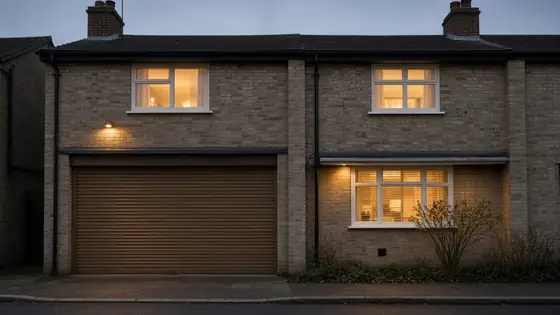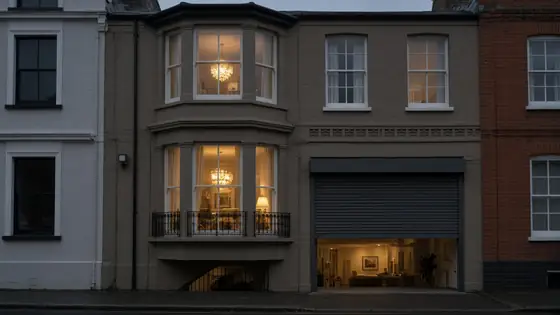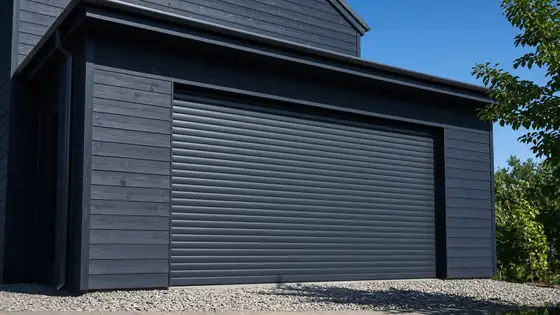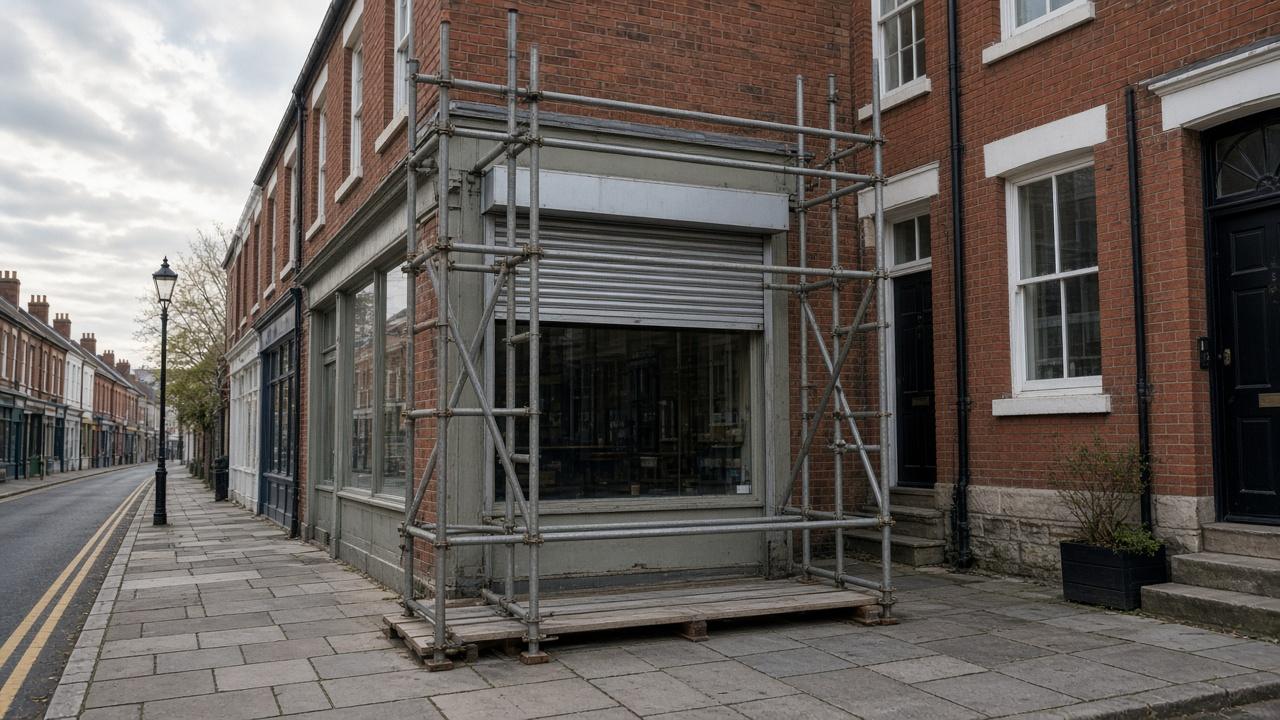
If the shutter is on a rear extension and the crew can stand in your garden, the council highway team usually never hears about it. If the only place for the scaffold feet is the public pavement, you need the highway authority's permission before the poles go up.
The garden job and the street job
Most domestic roller shutters in Britain are sold for a bifold at the back. The van parks on the drive, the ladders stand on your slabs, and the pavement is untouched. That visit doesn't need a scaffold licence. The price in the quote is the price of the curtain, the motor and the labour.
A street-facing window, a shopfront, or a terrace with no rear access is a different visit. The installer has to work from the highway. A tower, or a scaffold with standards on the footway, is occupying public land, even for a day. Highway authorities licence that. Turn up and hope, and you could find a council inspector stopping the job at 9am.
What you are actually applying for
The Highways Act 1980 gives the highway authority control over scaffolding on the highway. In practice, you or the scaffolding firm apply to the council for a licence. You tell them where the feet will stand, how long they'll be there, and how pedestrians will get past. Some councils want the scaffold designed so the footway stays open underneath. Some want a temporary walkway in the carriageway, which means traffic management and a bigger bill.
Lead times are the council's, not the shutter factory's. A fortnight is common. A town centre, or a street with a bus lane, can take longer. Order the curtain once you know the licence date, or you'll pay to store it.
Who pays, and who is named
The licence fee, the pavement closure and any parking suspension aren't inside a normal shutter supply price. Ask for them as separate lines. If the quote says 'access by others', you're the person who has to book it. If the installer includes it, check the licence will be in a name that can actually put the scaffold up, and that the dates match the install day.
A ladder on the pavement for twenty minutes isn't the same thing as a boarded scaffold left overnight. Don't describe a scaffold job as a ladder job to dodge the form. The council looks at what's standing there, not at the word on the risk assessment.
Rear access that is not really access
A side passage of 700 mm, a locked gate the neighbour controls, or a garden you can only reach by carrying a 4 metre axle through the house, will push a crew back onto the street. Measure the passage with the axle and the box in mind, not with an empty tape. If the axle can't turn the corner, the pavement is the plan, and the licence belongs in the programme.
Flats above a shop add a freeholder, and sometimes a pavement the shop already uses for displays. Get the access agreed in writing with whoever controls the forecourt. A shutter licence and a shop's own pavement permit are two pieces of paper.
Frequently asked questions
Does a rear bifold shutter need a pavement licence?
Not if the crew works entirely on your land. The licence comes in when scaffold or a tower stands on the highway.
Can the installer apply for me?
Often yes, if they're arranging the scaffold. Ask to see the approved licence before the install morning, with the dates on it.
What if the council refuses?
Then that elevation waits, or you find a way to work from your own side. Fitting from a borrowed ladder in the road isn't a workaround.