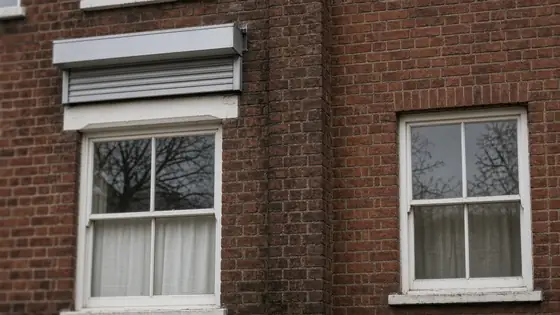
On a listed building, any work that affects its character as a building of special interest needs listed building consent, inside or out, and doing it without consent is a criminal offence. External roller shutter boxes are rarely approved on listed buildings. Restoring original timber shutters, free standing interior shutters and secondary glazing are far more likely to be acceptable. Talk to your council's conservation officer before ordering anything.
Key points
- Listed building consent can be needed for internal work, not just external.
- External shutter boxes on listed fronts are very rarely approved.
- Restoring original folding shutters is usually the preferred route.
- In England there is no fee for a listed building consent application.
What needs consent
Listing protects the whole building, inside and out, along with fixtures and some structures within its curtilage. Under the Planning (Listed Buildings and Conservation Areas) Act 1990 in England, and in Wales under the Historic Environment (Wales) Act 2023 (in force for listed buildings since 4 November 2024), consent is needed for demolition, alteration or extension that affects its character. Fixing a shutter box to a facade, cutting into masonry for guides, replacing original windows or removing original internal shutters can all need consent. Scotland and Northern Ireland have equivalent systems.
Because carrying out unauthorised works to a listed building is a criminal offence, and the council can require works to be reversed, it is worth getting a clear written view before you pay a deposit on made-to-measure shutters.
Options, from most to least likely to be approved
| Option | Likelihood of approval | Notes |
|---|---|---|
| Repairing and reusing original internal shutters | High | Often encouraged; may still need consent if altering fabric |
| Secondary glazing | Often acceptable | Reversible, slim profiles preferred |
| Plantation shutters fixed with minimal impact | Case by case | Avoid cutting historic joinery and shutter boxes |
| External shutters on a rear later extension | Case by case | Depends on the significance of that elevation |
| External roller shutter boxes on historic facades | Low | Usually seen as harmful to character |
How to approach it
- Find out what the listing covers. The list entry describes the building, though consent applies to the whole building whatever the description says.
- Ask the council's conservation officer for pre-application advice.
- Explain the problem you are solving: heat, cold, noise, privacy or security. There may be a better solution.
- If you apply, include drawings showing fixings and how the work could be reversed.
- Use installers who have worked on listed buildings and can supply the detail the council needs.
Original folding shutters
Many Georgian and Victorian listed houses still have their original folding shutters, often painted shut or hidden. Freeing and repairing them restores privacy, darkness and a useful amount of winter warmth, and is usually welcomed by conservation officers. Our guide to Victorian and Georgian window shutters covers how to find and restore them. See shutters for sash windows and our planning permission guide.
Frequently asked questions
Can I put shutters on a listed building?
Possibly, but you will usually need listed building consent. Restored original shutters and secondary glazing are more often approved than external roller shutters.
Do internal shutters need listed building consent?
They can, if fitting them affects the character of the building, for example by cutting into historic joinery. Check with the conservation officer.
How much does listed building consent cost?
In England there is no application fee for listed building consent, though drawings and specialist advice cost money.
What happens if I fit shutters without consent?
Unauthorised works to a listed building are a criminal offence and the council can require them to be removed.