Yes, a closed external roller shutter does insulate: it traps a layer of still air outside the glass and cuts heat loss through that window while it is down, typically by around 15 to 30 percent on modern double glazing and more on single glazing. But it only works when closed, usually at night. It does not replace double glazing, which insulates all day and every day.
Key points
- A closed shutter adds extra thermal resistance outside the glass.
- The saving is largest on single glazing and old double glazing.
- It only helps while the shutter is down, so it suits night time use.
- Fix failed sealed units and draughts first; a shutter is an extra layer, not a repair.
How a shutter reduces heat loss
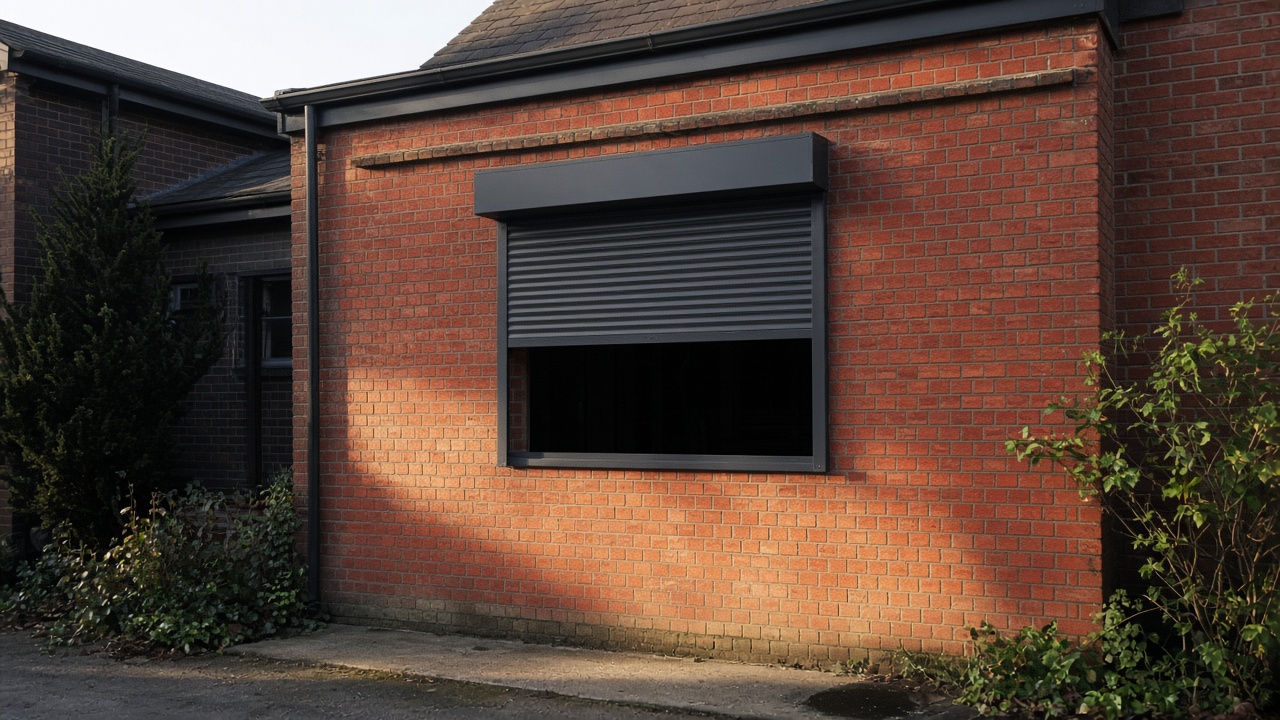
Heat escapes through a window by conduction through the glass and frame, by air leaking around the opening, and by radiation to the cold night sky. A closed roller shutter creates a pocket of relatively still air between the curtain and the glass, and blocks radiation from the pane to the sky. Both slow heat loss.
The European standard EN 13125 classifies how much additional thermal resistance a closed shutter adds, depending mainly on how airtight the curtain and its guides are. A well sealed shutter with foam filled slats adds more than a leaky one.
How big is the saving?
Using typical added resistance values, a closed shutter over a modern double glazed window with a U-value of about 1.4 W/m²K might bring the combined figure down to roughly 1.0 to 1.2 W/m²K while it is closed: a cut of around 15 to 30 percent through that window at night. On single glazing, which starts nearer 5 W/m²K, the cut is proportionally larger.
Research for Historic Environment Scotland on traditional sash windows found closed internal timber shutters substantially reduced heat loss through single glazing, in the order of half, which shows how much a well fitting closed layer can do.
| Window | Typical U-value bare | With a closed shutter (indicative) |
|---|---|---|
| Single glazing | About 4.8 to 5.5 | Roughly 2.5 to 3.5 |
| Older double glazing | About 2.6 to 3.0 | Roughly 1.8 to 2.3 |
| Modern double glazing | About 1.2 to 1.6 | Roughly 1.0 to 1.3 |
| Triple glazing | About 0.8 to 1.0 | Roughly 0.7 to 0.9 |
- Use our winter heat loss calculator to see a rough figure for your window size.
Shutters, double glazing and secondary glazing compared
If winter heat loss is your only problem, glazing upgrades usually win. If you also want a cooler house in summer, darker bedrooms or security, a shutter does several jobs at once and adds a winter saving on top.
| Option | Works when | Typical cost per window | Other benefits |
|---|---|---|---|
| New double glazing | All the time | £400 to £1,000+ | Lower noise, new frames |
| Secondary glazing | All the time | £300 to £800 | Big noise cut, listed building friendly |
| External roller shutter | Only when closed | £450 to £1,400 | Summer heat, blackout, security |
| Plantation shutters | Only when closed | £400 to £900 | Privacy, light control |
| Thermal curtains | Only when closed | £50 to £300 | Cheap, easy |
Get the most from shutters in winter
- Close shutters at dusk, not at bedtime. Set a timer for sunset.
- Open south facing shutters on sunny winter days to let free solar heat in.
- Make sure brushes in the guides are intact; gaps let cold air circulate.
- Insulated boxes matter: an uninsulated box can be a cold spot above the window.
- Ventilate rooms properly, as warm moist air against cold glass can cause condensation.
Frequently asked questions
Do roller shutters keep heat in?
Yes, while they are closed. A closed shutter typically cuts heat loss through a modern double glazed window by around 15 to 30 percent, and more on single glazing.
Can shutters replace double glazing?
No. Double glazing insulates all the time. A shutter only helps when it is down, so it works best as an extra night time layer.
Will roller shutters lower my heating bill?
They can reduce heat loss through the windows they cover at night, but windows are only part of a home's heat loss, so the overall saving is usually modest.
Do shutters cause condensation?
They can make the glass colder on the inside in some cases. Good ventilation and trickle vents help. See our condensation guide.