On a residential building with a storey at least 18 metres above ground, an external roller shutter fixed more than 4.5 metres up counts as a solar shading device under the Building Regulations, and its curtain and slats must be made of materials classed A2-s1, d0 or A1. Many ordinary domestic shutters do not meet that. On top of that, buildings of 18 metres or 7 storeys with two or more homes are higher-risk buildings, where building work can need approval from the Building Safety Regulator. Lease consent and access costs come after that.
Key points
- Above 4.5 m on an 18 m residential block, the slats must be A2-s1, d0 or A1.
- Higher-risk buildings: 18 m or 7 storeys with two or more homes.
- The freeholder's written consent comes before any order.
- Internal options avoid all three problems.
The rule most shutter quotes miss
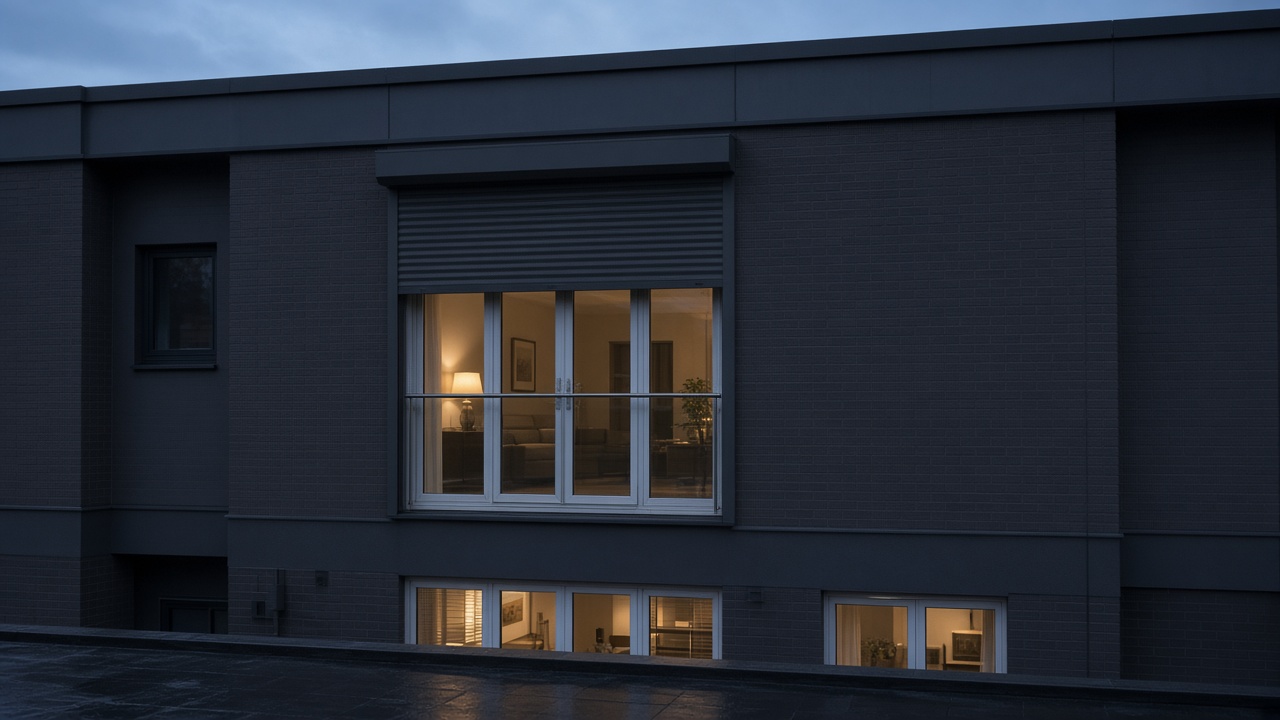
Regulation 7 of the Building Regulations bans combustible materials in the external walls and "specified attachments" of relevant buildings: buildings with a storey at least 18 metres above ground that contain dwellings. Regulation 2 defines a specified attachment to include a solar shading device, unless it is attached no more than 4.5 metres above ground. A solar shading device is anything attached to the outside of an external wall to reduce heat gain by shading. An external roller shutter does exactly that.
The exemptions in regulation 7 cover associated components, such as fixings, but expressly not the parts whose job is to shade, such as the curtain or slats. Those must be classed A2-s1, d0 or A1. A standard domestic slat with a foam core is a composite of metal and polymer foam, so do not assume it complies. Ask the maker for the reaction to fire classification of the curtain, in writing, before anything is ordered.
Which rules apply to your flat
GOV.UK guidance on existing buildings defines a higher-risk building during building work as one with at least two residential units that is at least 18 metres tall or has at least 7 storeys. Work on those buildings can need Building Safety Regulator approval rather than ordinary building control, so ask the managing agent how any change to the facade will be handled.
| Building | Shutter height | Combustible materials ban on the curtain | Higher-risk building regime |
|---|---|---|---|
| Low-rise block, top storey under 18 m | Any | No | No, unless 7 storeys or more |
| Block with a storey at 18 m or more | Up to 4.5 m above ground | No | Yes, if two or more homes |
| Block with a storey at 18 m or more | Above 4.5 m | Yes: A2-s1, d0 or A1 | Yes, if two or more homes |
Consent, wind and access
Your lease almost certainly treats the external walls and windows as the freeholder's. You need written consent before anything is fixed outside, and many blocks refuse external shutters to keep the facade uniform. Flats also lack the householder permitted development rights houses have, so planning permission is usually needed. See flats have fewer permitted development rights.
Wind loads rise with height and exposure, so a shutter on the tenth floor needs a higher wind class than the same size on a bungalow. Above the first couple of floors, fitting is done from a mobile platform, a cradle or by rope access, and access can cost more than the shutters. See roller shutters in high wind.
What usually works instead
Most people in tall blocks end up with internal measures: plantation shutters or blackout blinds for privacy and sleep, and solar control on the glass for heat. None of these touch the external wall. Where heat is severe, the building owner is the right person to raise shading with, because a facade-wide solution can be specified and tested once. See external shutters versus internal blinds.
Frequently asked questions
Can I fit external shutters to my flat in a tall block?
Only with the freeholder's consent and usually planning permission. Above 4.5 m on a building with a storey at 18 m or more, the curtain and slats must also be A2-s1, d0 or A1.
Why does 4.5 metres matter?
The Building Regulations exclude solar shading devices attached no more than 4.5 m above ground from the combustible materials ban. Above that height they are covered.
What is a higher-risk building?
For building work on an existing building, one with at least two homes that is at least 18 m tall or has at least 7 storeys.
Why is fitting shutters on a high floor expensive?
Access by platform, cradle or rope access often costs more than the shutters.