There are two families of window shutter on UK homes: interior shutters fitted inside the window reveal, and exterior shutters fixed to the wall outside the glass. The interior types are full height, café style, tier on tier, solid panel, shaped and tracked shutters, plus the original folding box shutters built into many Victorian and Georgian houses. The exterior types are roller shutters, security roller shutters, hinged shutters and sliding shutters. Pick by the job first: privacy and light control point inside, heat, night cover and security point outside.
Key points
- Interior shutters control light and privacy from the room side. Exterior shutters stop sun, weather and people before they reach the glass.
- Tracked shutters are for doors and very wide openings, where hinged panels would have nowhere to swing.
- A roller shutter is only a security product if it holds a third party certificate. Ordinary foam filled slats are for shade and cover.
Every type at a glance
The last column links to our guide on sizes, limits and prices for each type.
| Type | Inside or outside | Opens how | Good for | Watch out for | Our guide |
|---|---|---|---|---|---|
| Full height | Inside | Hinged panels cover the whole window; louvres tilt. A mid rail can be added | Most rooms | Panels must swing clear of window handles | Plantation shutters explained |
| Café style | Inside | Hinged panels over the lower half only | Kitchens, bathrooms, street level privacy | Top glass stays bare, so no darkness | Café style shutters |
| Tier on tier | Inside | Top and bottom sets of panels open separately | Tall sash windows, street facing rooms | More panels and hinges than full height | Plantation styles |
| Solid panel | Inside | Hinged panels with no louvres; open fully to let light in | Bedrooms, period rooms | No halfway light setting | Solid panel shutters |
| Shaped | Inside | Made to the window outline | Arches, angled loft and gable windows | Some arched sections are fixed | Shutters for arched windows |
| Tracked (bifold or bypass) | Inside | Panels hang from a top track and fold up or slide past each other | Patio and bifold doors, very wide windows, room dividers | Panel width limits and space for the stacked panels | Plantation shutters on bifold doors |
| Victorian or Georgian box shutters | Inside, built into the reveal | Panelled leaves fold out of boxes in the window reveals | Original sash windows in period houses | Often painted shut; listed building consent | Victorian and Georgian shutters |
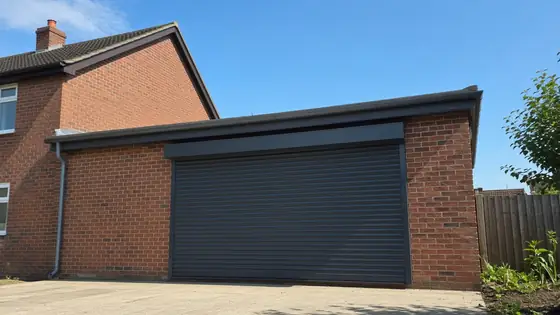
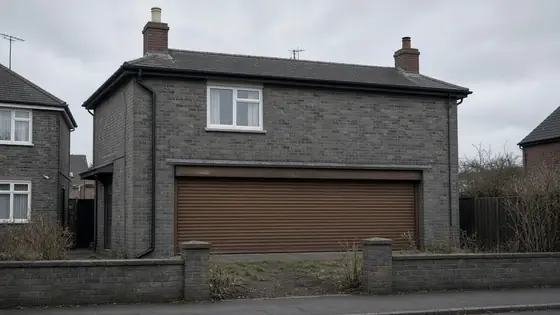
| External roller | Outside | Slatted curtain rolls into a box above the window, by strap, crank or motor | Heat, blackout, night cover | Box on the wall and planning | External roller shutters |
| Security roller | Outside | As a roller, with heavier extruded slats | Ground floor and rear glass | No certificate, no security rating | LPS 1175 home shutters |
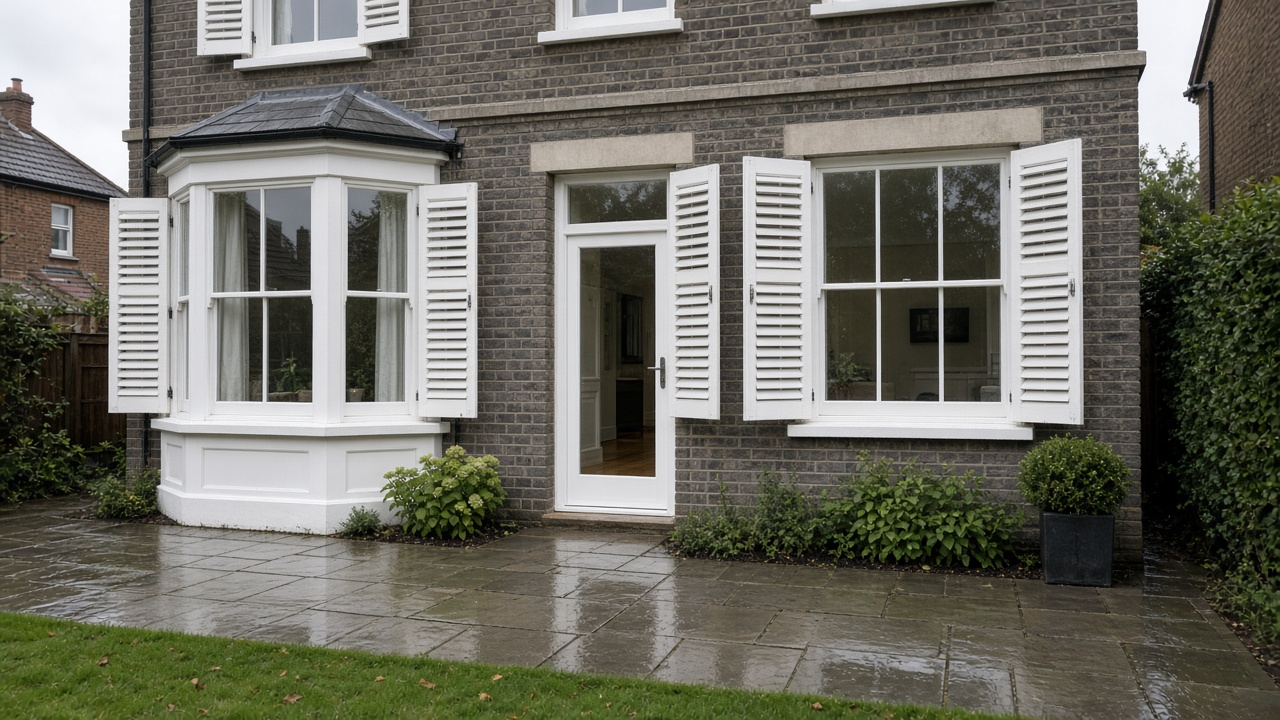
| External hinged or louvred | Outside | Leaves swing on hinges and fold back against the wall | A traditional front; locking cover over an open window | Wall space each side; clash with outward opening windows | External hinged shutters |
| External sliding | Outside | Panels run on a top track and park beside the opening | Wide openings, balconies, modern elevations | Needs clear wall to park the panels | External sliding shutters |
Interior shutters: one panel, six arrangements
Plantation style interior shutters are louvred panels in a frame inside the reveal, and the style names describe how the panels are arranged. Shuttercraft's style list is typical of the trade. Full height panels cover the entire window, with an optional mid rail. Tier on tier splits the window into top and bottom sections you can open or close independently, which Shuttercraft lists as suited to Victorian window types. Café style covers only the lower half, and it names kitchens and bathrooms as places it suits.
Solid panel shutters replace the louvres with flat panels. As Shuttercraft puts it, there are no slats, so the shutter has to be opened fully to let light in. That makes them the darkest interior option and the closest match to original period shutters, but you lose the halfway setting louvres give you.
Tracked shutters: where hinged panels will not work
On patio doors, bifolds or a run of glass, tracked shutters hang the panels from a track instead of hinges. On a bifold track the panels fold up against each other; on a bypass track they slide past each other on parallel runners.
Each maker sets its own limits, so ask before you order. Chichester Shutters gives a panel width limit of 660 mm, which means a four panel set covers up to 2,640 mm and a six panel set up to 3,960 mm. It says tracked shutters need a bottom guide, and that most need a horizontal rail once the panels are taller than 1,981 mm. Thomas Sanderson says its tracked shutters can be fitted without a bottom track, which is how they are used as room dividers. For doors, read shutters for bifold doors before you choose between a tracked interior shutter and an external roller.
Exterior shutters: rollers, hinged and sliding
Exterior shutters work in front of the glass, which is why they do jobs interior shutters cannot: they stop the sun before it heats the glass and they put a physical layer between the window and the street. The European performance standard for them is BS EN 13659:2015, which covers shutters and external venetian blinds fitted outside buildings.
Roller shutters roll a slatted curtain into a box above the window. heroal, a German maker, describes two box positions: surface mounted, in the reveal or in front of the facade, which suits retrofits, and flush mounted, built out of sight into the facade insulation of a new or renovated building.
Hinged exterior shutters are the traditional look. Shuttercraft says its aluminium panels lock shut while the louvres still tilt, so a window can stay open behind them, and warns that most UK windows open outwards, so check the shutters will not collide with the opening sash. Sliding exterior shutters hang from a top track and park beside the opening; Schenker Storen lists panels from 550 to 2,200 mm wide and 800 to 3,000 mm high, rated to wind class 6 at 92 km/h.
Security shutters are a certificate, not a look
Only a tested and certified shutter carries a security rating; heroal, for example, sells slats tested to burglar resistance classes RC 2 and RC 3. In the UK, one rating to look for on a quote is LPS 1175. Secured by Design, the police scheme, says it does not test products itself, so ask the installer for the certificate and the test house that issued it. Our guide to LPS 1175 shutters for homes explains the ratings, and security shutters covers fitting.
On a historic building the order of preference is different. Historic Scotland's Managing Change guidance on windows says traditional internal shutters, or internal retractable grilles if needed, are likely to be less disruptive to a historic building than external shutters.
Start with the job, then pick the type
Our plantation shutter cost guide and external shutter cost guide give our published bands, and the shutter finder narrows the choice for a single window.
| What you want | Look at first | Why |
|---|---|---|
| Privacy at street level, light above | Café style or tier on tier | Covers the lower glass only, or lets the top open separately |
| A dark bedroom | Solid panel inside, or an external roller | No louvre gaps; a roller blocks light outside the glass |
| A cooler room in summer | External roller or sliding shutter | Stops the sun before it reaches the glass |
| Night cover and a slower way in | Certified security roller | A rated product, not just a closed curtain |
| Cover for patio or bifold doors | Tracked interior shutters or an external roller | Neither needs room for hinged panels to swing |
| The look the house was built with | Original box shutters, or solid panels in the reveal | Matches period joinery |
Frequently asked questions
What are the main types of interior shutters?
Full height, café style, tier on tier, solid panel, shaped and tracked. Most are louvred panels arranged differently; solid panel shutters have flat panels instead of louvres.
What are the types of exterior shutters in the UK?
Roller shutters, security roller shutters, hinged shutters and sliding shutters. Rollers sit in a box above the window; hinged and sliding shutters need clear wall beside it.
Which type of shutter suits a bay window?
Interior shutters on a frame shaped to the bay are the usual choice, in full height, tier on tier or café style. Shuttercraft, for example, offers bay shutters from café style to full height.
What is the difference between tier on tier and café style shutters?
Café style covers only the lower half of the window. Tier on tier covers the whole window in two sets of panels that open separately.
Are plantation shutters and window shutters the same thing?
Plantation shutters are one type of interior window shutter, with wide louvres. Window shutters also include solid panels, original box shutters and every exterior type.
Do external shutters keep burglars out?
Only a certified security shutter carries a rating, such as LPS 1175. A standard foam filled roller is not rated.
Sources and further reading
- Shuttercraft: shutter styles (full height with optional mid rail, tier on tier, café style, solid panel, track, shaped, bay), checked 28 Nov 2026
- Chichester Shutters: wide bifolding doors with top tracks (660 mm panel width limit, bottom guide, horizontal rail over 1981 mm), checked 28 Nov 2026
- Thomas Sanderson: tracked shutters (large windows and doors, can be fitted without a bottom track), checked 28 Nov 2026
- Shuttercraft: how to select the best external window shutters (aluminium, lockable panels, outward opening windows), checked 28 Nov 2026
- heroal: roller shutter systems (surface mounted and flush mounted boxes, roll formed foam filled and extruded slats, RC 2 and RC 3 slats), checked 28 Nov 2026
- Schenker Storen: aluminium sliding shutters (550 to 2,200 mm wide, 800 to 3,000 mm high, wind class 6 at 92 km/h, top carriage and lower guide), checked 28 Nov 2026
- BSI: BS EN 13659:2015, shutters and external venetian blinds, performance requirements including safety, checked 28 Nov 2026
- Secured by Design: standards explained (SBD does not undertake any testing itself), checked 28 Nov 2026
- Historic Scotland: Managing Change in the Historic Environment, Windows (October 2010 edition, copy hosted by Aberdeenshire Council), checked 28 Nov 2026